






What's Happening?
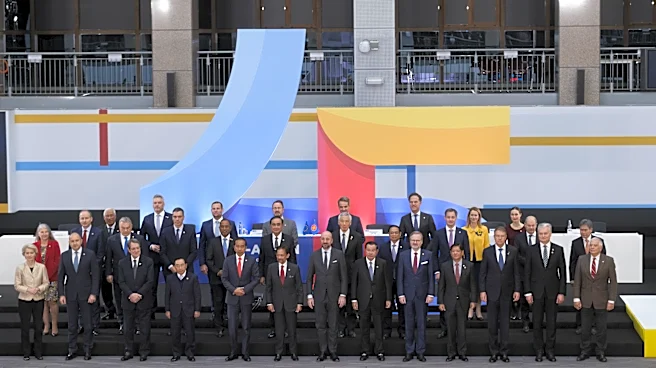
U.S. Secretary of War Pete Hegseth introduced the 'NATO 3.0' approach at the NATO Defense Ministers’ Meeting in Brussels in June 2026. This strategy advocates for NATO to refocus on its foundational Cold War mission of defending Europe and developing
a stronger war-fighting capability. The approach calls for a reevaluation of the alliance's expanded post-Cold War responsibilities, which had increasingly included counterterrorism, crisis management, and various global challenges. NATO 1.0 focused on collective defense and deterrence against the Soviet Union, while the post-Cold War era saw an expansion of its mission. NATO 3.0 signifies a period where European nations are expected to assume greater responsibility for their own defense, allowing the United States to reorganize its global strategic priorities, particularly towards the Indo-Pacific region. American efforts to reduce its military presence in Europe to pre-2022 levels and redeploy forces are part of this transformation, aiming to enhance Europe's defense resilience rather than weaken NATO.
Why It's Important?
The 'NATO 3.0' strategy is significant as it signals a major shift in the transatlantic alliance's operational focus and burden-sharing. The U.S. demand for greater defense contributions from European allies, a long-standing issue, is now framed within a broader strategic reorganization. This approach aims to reduce the necessity for large-scale American military intervention in every European crisis by fostering stronger European military capabilities. While the U.S. seeks to rebalance its global strategic priorities, particularly towards the Indo-Pacific, the growth of European military power is intended to strengthen NATO's collective deterrence, not replace the U.S. strategic contribution. The strategy also necessitates a reconsideration of the role of nuclear weapons in European defense, especially given Russia's significant non-strategic nuclear capabilities. This re-evaluation could lead to new debates about European defense architecture and the potential for increased contributions from nations like France, as proposed by French President Emmanuel Macron.
What's Next?
The implementation of NATO 3.0 will involve European countries developing the necessary capabilities to defend themselves, potentially reducing the need for extensive American military intervention in future crises. Discussions will likely continue regarding the future role of nuclear weapons in European defense, including the concept of 'forward deterrence' introduced by French President Emmanuel Macron, which suggests a greater contribution from France's nuclear capabilities to European security. Poland's interest in such proposals indicates a growing concern among European nations about their security. The success of NATO 3.0 hinges on establishing a balance where Europe assumes greater responsibility while the United States maintains its strategic security guarantees. This transformation is expected to lead to a stronger alliance based on increased mutual responsibility, rather than a division of the transatlantic partnership.
Beyond the Headlines
The 'NATO 3.0' initiative reflects deeper geopolitical shifts, including Russia's ongoing pressure on European security and China's emergence as a global power. The U.S. redirection of military resources towards other regions underscores a strategic re-prioritization that necessitates a more self-reliant Europe. This shift could trigger significant changes in the alliance's existing structure, particularly if discussions about developing independent European nuclear deterrence capabilities accelerate due to a deepening strategic divide between the U.S. and Europe. While the goal is to strengthen NATO's long-term sustainability, the ethical and political implications of increased European military autonomy and potential nuclear proliferation within the continent will be critical considerations. The strategy aims to transform, not divide, the transatlantic alliance, but the path forward will require careful navigation of complex security, political, and economic dynamics.