







What's Happening?
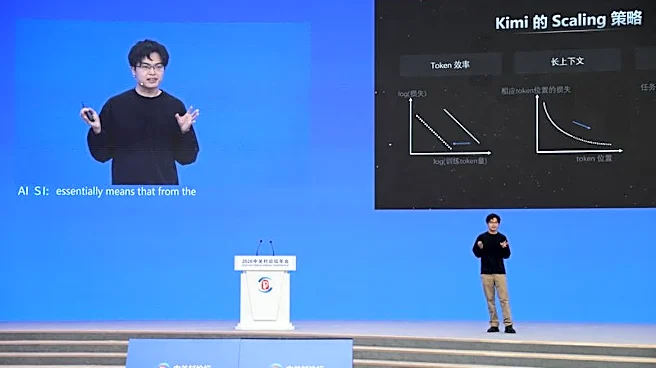
A new artificial intelligence model from China, known as Kimi K3, has surprised the U.S. tech industry with its capabilities that rival those of leading U.S. models like Anthropic's Claude and OpenAI's ChatGPT. Developed by the Beijing-based startup Moonshot,
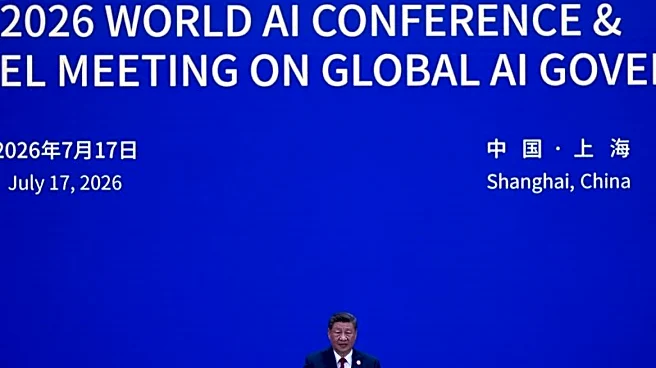
K3 has been recognized for its performance in front-end coding capabilities, topping the charts in Arena's AI system evaluations. The release of K3 coincides with Chinese President Xi Jinping's address at the World Artificial Intelligence Conference in Shanghai, highlighting China's advancements in AI amidst U.S. restrictions on technology access. The model's release has sparked discussions about the competitive dynamics between Chinese and U.S. AI companies, with some analysts viewing it as a potential revenue challenge for U.S. firms.
Why It's Important?
The emergence of competitive AI models from China signifies a shift in the global AI landscape, challenging the dominance of U.S. tech giants. This development could lead to increased competition and innovation in the AI sector, potentially driving down costs and expanding access to advanced AI technologies. However, it also raises concerns about intellectual property and the potential for technology distillation, where competitors may replicate capabilities at a lower cost. The rivalry between the U.S. and China in AI development reflects broader geopolitical tensions and could influence future policy decisions regarding technology sharing and collaboration.
What's Next?
As Chinese AI models continue to gain traction, U.S. companies may need to reassess their strategies to maintain a competitive edge. This could involve increased investment in research and development, as well as exploring partnerships or collaborations to enhance their offerings. Additionally, policymakers may need to consider the implications of international competition in AI and the potential need for regulatory frameworks to address issues of intellectual property and technology transfer. The ongoing developments in AI could also impact global economic and technological leadership, with both countries vying for dominance in this critical field.