




What's Happening?
Kīlauea volcano in Hawaii has experienced significant seismic activity, with nearly 100 earthquakes recorded beneath its summit within a 24-hour period. The largest earthquake measured magnitude 3.4. This increased volcanic unrest led the National Park
Service to temporarily close the Keanakākoʻi area of Hawaiʻi Volcanoes National Park for safety. The closure includes Old Crater Rim Drive, overlooks near Keanakākoʻi Crater, and the Crater Rim Trail to Keanakākoʻi. The strongest seismic activity occurred between Wednesday evening and early Thursday morning. However, since 3 a.m. Thursday, summit inflation has leveled off, and earthquake activity has decreased. Webcam imagery showed no new ground cracking or lava eruption in new locations, according to the National Park Service.
Why It's Important?
The seismic swarm at Kīlauea is a critical indicator of ongoing volcanic unrest, signaling potential changes in the volcano's activity. While the immediate threat has subsided with decreasing earthquake activity, such events highlight the dynamic and unpredictable nature of active volcanoes. The temporary closure of parts of the national park underscores the priority of public safety in areas prone to natural hazards. For residents and tourists in Hawaii, understanding these seismic events is vital for preparedness and adherence to safety guidelines. The continuous monitoring by the USGS Hawaiian Volcano Observatory is essential for providing timely warnings and ensuring public safety, especially given Kīlauea's history of frequent eruptions and its status as one of the world's most active volcanoes.
What's Next?
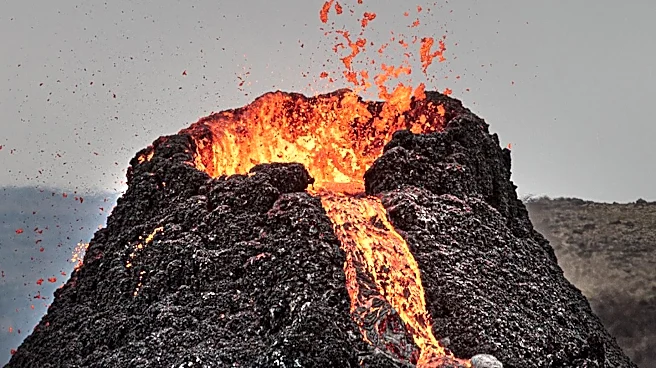
The USGS Hawaiian Volcano Observatory will continue to closely monitor Kīlauea for further signs of unrest, including seismic activity, ground deformation, and gas emissions. While earthquake activity has decreased, the observatory reports that the 55th episode of Kīlauea’s ongoing eruption is expected to begin soon, following a shallow intrusion of magma overnight within the summit region. The National Park Service will assess the volcanic conditions to determine when it is safe to reopen the closed areas of the park. Residents and visitors are advised to stay informed through official channels and adhere to any further advisories or closures issued by park authorities and geological surveys. The ongoing monitoring will help predict and prepare for future eruptive phases.
Beyond the Headlines
The frequent seismic activity and eruptions at Kīlauea offer scientists invaluable data for understanding volcanic processes and improving eruption forecasting models. Each event contributes to a broader scientific understanding of how magma moves beneath the surface and how stress accumulates within the volcanic edifice. For the local Hawaiian community, Kīlauea is not just a geological feature but a deeply significant cultural and spiritual entity. The volcano's activity is intertwined with traditional beliefs and practices, making its monitoring and the communication of its status a matter of both scientific and cultural importance. The balance between scientific study, public safety, and cultural respect is a continuous aspect of managing an active volcano like Kīlauea.