





What's Happening?
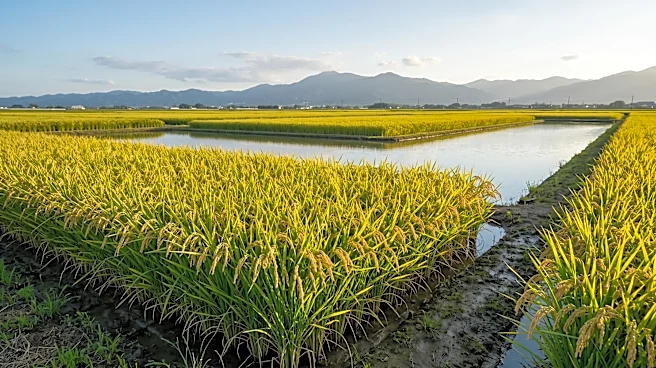
Japanese farmers are increasingly turning to new heat-resistant rice varieties, such as hinatamaru, to combat the adverse effects of rising temperatures and climate change on their staple crop. Traditional rice strains have struggled under prolonged heatwaves
and reduced rainfall, leading to lower yields and compromised grain quality. The new varieties are designed to thrive in these challenging conditions, producing plump, high-quality grains even after hot and dry summers. This shift is particularly evident in regions like Saga prefecture, which now leads the country in the adoption of these resilient strains, with nearly 67% of its rice acreage dedicated to them. The development of these heat-tolerant varieties involves extensive research, including cross-breeding existing strains and conducting real-world trials, a process that can take over a decade.
Why It's Important?
The adoption of heat-resistant rice varieties is crucial for ensuring food security in Japan, where rice is a fundamental part of the diet. The climate crisis has made growing traditional rice a significant risk, impacting both crop viability and market prices. Greenpeace Japan has warned that several iconic autumn crops, including rice, are at risk due to accelerating heatwaves pushing agricultural hubs past their thermal limits. The success of these new varieties helps mitigate the economic impact on farmers, who have faced plummeting prices due to poor quality yields. Furthermore, it addresses the broader challenge of adapting agriculture to a warming planet, providing a model for other regions facing similar climatic pressures. The initiative also highlights the ingenuity of farmers and agricultural research centers in developing sustainable solutions for a changing environment.
What's Next?
The trend of adopting heat-tolerant rice varieties is expected to continue expanding across Japan, with agricultural officials actively promoting their use to combat declines in quality and yield. The use of these varieties covered a record 18% of the overall rice crop last year, a significant increase from the previous year, indicating a rapid uptake. Further research and development will likely focus on enhancing these strains and developing new ones to ensure long-term resilience. Farmers may also continue to adjust their working patterns, such as starting earlier in the day, to avoid the most intense heat. The success of these efforts will be vital for maintaining Japan's food supply and supporting its aging farming population, many of whom are grateful for solutions that allow them to continue their livelihoods effectively.
Beyond the Headlines
Beyond the immediate agricultural benefits, the widespread adoption of heat-resistant rice varieties underscores a broader societal adaptation to climate change. It highlights the critical role of scientific innovation and agricultural research in addressing global environmental challenges. The initiative also touches upon the cultural significance of rice in Japan, where its quality and availability are deeply intertwined with national identity and culinary traditions. The shift reflects a proactive approach to climate adaptation, moving beyond mitigation to practical solutions that ensure the continuity of essential food systems. This adaptation also brings into focus the economic vulnerability of agricultural communities and the need for sustained support and investment in resilient farming practices.