





What's Happening?
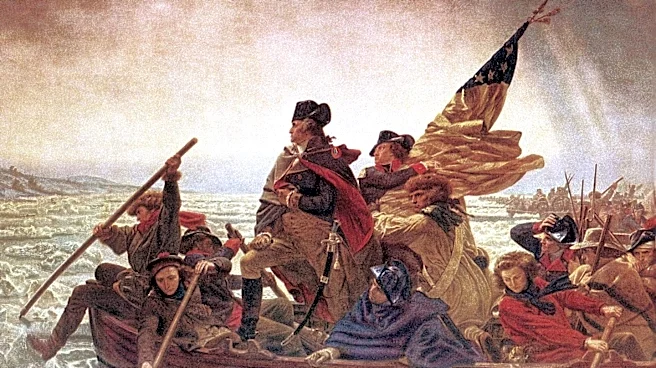
Colonel John Glover and his Marblehead Regiment played a pivotal role in General George Washington's surprise attack on Hessian forces during the Revolutionary War. On December 25, 1776, Glover's regiment piloted and steered the boats that transported
2,400 American troops and 18 cannons across the icy Delaware River. This daring maneuver, conducted amidst a snowstorm, was a critical component of the plan to attack Trenton, New Jersey. The successful crossing enabled Washington's forces to launch a surprise assault on December 26, leading to a decisive victory that significantly boosted American morale and sustained the war effort. Glover's men, many of whom were experienced sailors and fishermen from Marblehead, Massachusetts, were uniquely suited for this challenging task, demonstrating their invaluable maritime skills in a crucial moment of the conflict. The operation marked the beginning of the '10 Crucial Days' of the New Jersey Campaign, which ultimately turned the tide of the war.
Why It's Important?
The successful crossing of the Delaware River, facilitated by Colonel John Glover's regiment, was a turning point in the American Revolutionary War. At a time when American morale was at an all-time low following a series of defeats and dwindling enlistments, the victory at Trenton provided a much-needed boost. It demonstrated the Continental Army's capability to strike effectively against well-trained Hessian mercenaries, inspiring new recruits and reinvigorating public support for the Patriot cause. Without the precise and skillful execution of the river crossing, the surprise element of the attack would have been lost, potentially leading to a different outcome at Trenton and further demoralizing the American forces. This event underscored the strategic importance of naval and maritime expertise, even in land-based campaigns, and highlighted the critical contributions of individuals and specialized units like Glover's regiment to the overall success of the American Revolution. The victory ensured the continuation of the fight for independence.
What's Next?
The immediate aftermath of the Battle of Trenton saw Washington's forces return to Pennsylvania, but the success prompted further strategic actions. Congress extended Washington's dictatorial powers and authorized the raising of additional infantry battalions, recognizing the renewed momentum. Washington, facing expiring enlistments, offered a bounty to his soldiers to stay for another month, a move that proved successful in retaining much-needed manpower. The victory at Trenton set the stage for subsequent engagements, including the Battle of Princeton, which further solidified the American position and demonstrated the Continental Army's resilience. The '10 Crucial Days' continued to unfold, with Washington's leadership and the continued efforts of his troops, including those with specialized skills like Glover's regiment, proving essential in maintaining the fight for American independence against the British and Hessian forces.
Beyond the Headlines
The story of John Glover and his Marblehead Regiment extends beyond their direct military contributions, symbolizing the diverse skills and local initiatives that fueled the American Revolution. Marblehead's claim as the 'Birthplace of the American Navy' stems from Glover's earlier actions in assembling a small fleet for George Washington in 1775, including the schooner Hannah, to intercept British supplies. This highlights the decentralized and often improvised nature of early American military efforts, where local resources and expertise were critical. The town's enduring pride in its Revolutionary War heritage, preserved through historic sites and narratives, reflects how these foundational events continue to shape regional identity and national memory. The legacy of Glover's regiment serves as a reminder that the success of the Revolution was built not only on grand strategies but also on the practical skills and unwavering commitment of ordinary citizens turned soldiers.