
What's Happening?
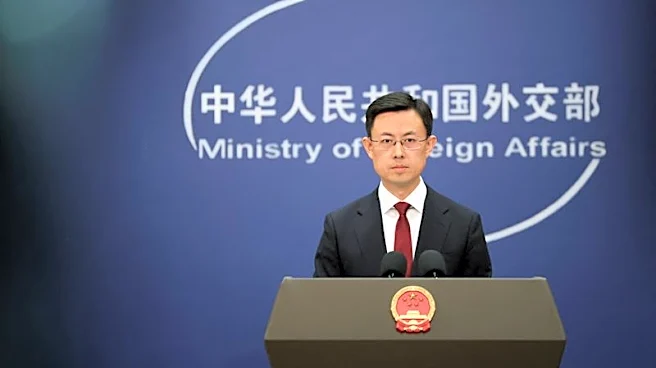
Japan has formally protested against China's ongoing oil and gas projects in the East China Sea, which Japan claims are being developed unilaterally by China in disputed waters. The Japanese government
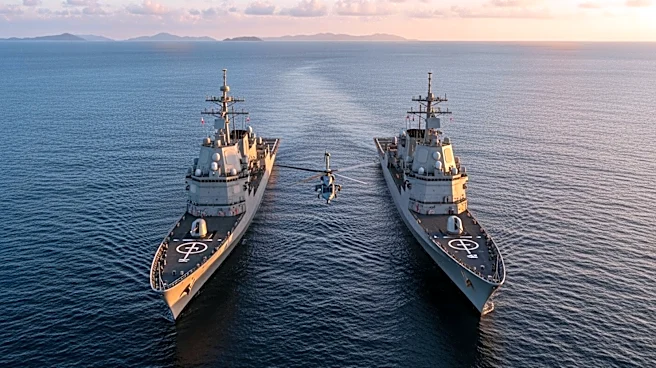
has urged China to halt these activities and resume negotiations to settle the maritime boundary. The dispute centers around the median line that Japan considers the demarcation boundary, which China does not recognize. Despite a 2008 agreement to jointly develop resources in the area, China has continued its projects independently. Japan's Ministry of Defense has identified 22 Chinese offshore structures in the contested zone. The situation is further complicated by broader geopolitical tensions, including disputes over the Senkaku Islands and Taiwan.
Why It's Important?
The ongoing dispute over the East China Sea is significant as it highlights the broader geopolitical tensions in the region, particularly between Japan and China. The unilateral development of resources by China in disputed waters could escalate tensions and impact regional stability. This situation also underscores the challenges in international maritime law and the difficulties in resolving territorial disputes. The economic implications are substantial, as the area is rich in resources that both nations wish to exploit. The dispute could affect international trade routes and energy supplies, impacting global markets and regional economies.
What's Next?
Japan is likely to continue diplomatic efforts to resolve the dispute, potentially seeking international mediation or support from allies. China may continue its development activities, which could lead to increased tensions and potential confrontations at sea. The international community, particularly countries with interests in the region, will be closely monitoring the situation. Future negotiations or international legal proceedings could be on the horizon if bilateral talks remain stalled.