






What's Happening?
In Shenzhen, emerging brands are expanding as consumer preferences shift towards lifestyle categories, according to JLL's Asia Pacific Retail Market Dynamics Report. The fourth quarter of 2025 saw increased activity in retail leasing, driven by outdoor
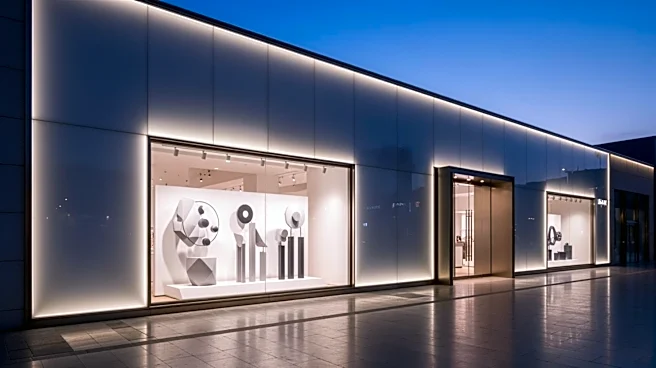
sports, consumer electronics, and art toy brands. Flagship store openings and upgrades are enhancing customer experiences, while traditional retailers face slower growth. New food and beverage concepts and Chinese streetwear brands are rapidly expanding. A new retail project by China Resources Land in suburban Shenzhen has introduced regional-first stores, achieving high occupancy due to strong local demand. Despite heavy retail supply, prime malls continue to attract premium brands, while non-core malls rely on entertainment tenants.
Why It's Important?
The expansion of emerging brands in Shenzhen reflects broader consumer trends towards lifestyle and experiential retail. As consumer preferences evolve, brands that adapt to these changes can capture market share and drive growth. The focus on enhancing customer experiences through flagship stores and innovative concepts highlights the importance of differentiation in a competitive retail landscape. This trend also underscores the potential for retail innovation to stimulate economic activity and urban development. As Shenzhen continues to support consumption through subsidies and events, the retail sector is poised for further transformation, influencing regional retail strategies and consumer behavior.
What's Next?
Shenzhen plans to continue stimulating consumption in 2026 with subsidies and trade-in programs, alongside events like concerts and sports to boost retail demand. Approximately 250,000 square meters of new retail space is expected in the next year, although vacancy and rent pressures may persist due to weak consumption recovery. Retailers will need to innovate and adapt to maintain competitiveness, focusing on customer experience and strategic tenant mix. The ongoing evolution of consumer preferences will likely drive further changes in retail strategies, influencing the development of new retail formats and concepts.