







What's Happening?
A recent cross-sectional study has identified a correlation between reduced regional spontaneous brain activity and cognitive impairment in patients suffering from Chronic Obstructive Pulmonary Disease (COPD). The research, which included 90 participants
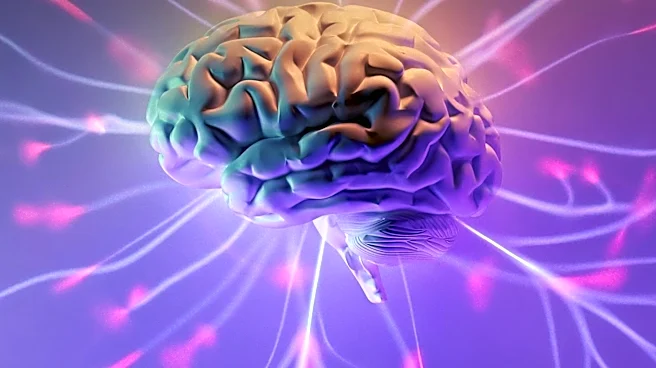
divided into healthy controls, COPD patients without cognitive impairment, and COPD patients with cognitive impairment, utilized resting-state functional MRI (fMRI) to measure the amplitude of low-frequency fluctuation (ALFF) in various brain regions. The findings indicate that COPD patients with cognitive impairment exhibited lower ALFF in the left precuneus, left putamen, and bilateral parahippocampal gyri. Furthermore, among COPD patients, lower arterial oxygenation (PaO2) was associated with reduced ALFF in the left precuneus and left putamen. The study also found that higher regional ALFF correlated with better cognitive performance, particularly in the left precuneus. These results suggest a potential neuroimaging marker for cognitive vulnerability in COPD patients linked to oxygen levels.
Why It's Important?
This study is important because it sheds light on the neurological underpinnings of cognitive impairment in COPD, a common yet often underrecognized comorbidity. By identifying specific brain regions (left precuneus, left putamen, and parahippocampal gyri) where activity is reduced in cognitively impaired COPD patients, the research provides a clearer understanding of how chronic hypoxemia might contribute to cognitive decline. This understanding could lead to improved diagnostic tools and targeted interventions. Cognitive impairment in COPD can significantly impact a patient's ability to manage their condition, adhere to medication regimens, and participate in pulmonary rehabilitation, ultimately affecting their quality of life and increasing healthcare burdens. Recognizing these brain activity changes could prompt earlier cognitive screening and more personalized care strategies, potentially mitigating the progression of cognitive deficits and improving overall patient outcomes.
What's Next?
The study's authors emphasize that due to its cross-sectional design, the findings do not establish temporal or causal relationships. Therefore, future research will need to focus on longitudinal studies with repeated measurements of oxygenation, brain function, and cognition to confirm these associations and determine causality. More comprehensive control of potential confounders, such as undiagnosed obstructive sleep apnea (OSA), will also be crucial. The findings provide a rationale for future clinical trials to include cognitive and brain-functional outcomes alongside traditional respiratory and exercise measures. While regional ALFF is currently a research-level measure, further validation could explore its potential as a diagnostic biomarker or for guiding individualized treatment approaches. Additionally, studies could investigate whether interventions like oxygen supplementation, pulmonary rehabilitation, or cognitive training can normalize ALFF and prevent cognitive decline in COPD patients.
Beyond the Headlines
The implications of this research extend beyond immediate clinical applications, touching upon the broader understanding of brain health in chronic diseases. The involvement of the precuneus, a region critical for internally directed cognition, visuospatial processing, attention, and memory, highlights the complex interplay between systemic physiological conditions and neurological function. This study underscores the need for a holistic approach to managing chronic diseases like COPD, where comorbidities such as cognitive impairment are not treated in isolation but as integral parts of the patient's overall health. Ethically, these findings raise questions about the responsibility of healthcare systems to routinely screen for cognitive impairment in vulnerable populations and to develop integrated care pathways that address both physical and cognitive health. Culturally, it may help destigmatize cognitive issues in chronic illness by providing a biological basis for these challenges, fostering greater empathy and support for affected individuals.