






What's Happening?
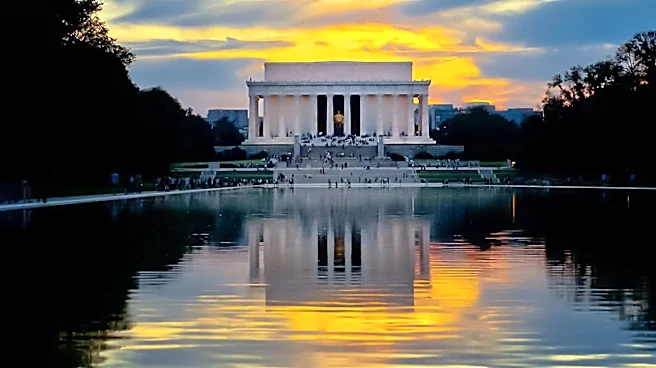
A former Olympic canoe racer, David Hearn, is set to face trial on September 28 for allegedly causing damage to the Lincoln Memorial Reflecting Pool in Washington, D.C. Hearn, who has pleaded not guilty, was indicted on a felony charge of property destruction,
accused of causing at least $1,000 in damage. The charge carries a potential maximum sentence of 10 years in prison. The Reflecting Pool, which underwent a multimillion-dollar renovation project initiated by President Trump, has been a subject of controversy due to its escalating costs and alleged vandalism. Hearn's defense argues that the government has not preserved crucial evidence, claiming that recent draining of the pool has destroyed potential proof of his innocence. The case has drawn attention as Hearn and his supporters suggest the prosecution is politically motivated, aiming to deflect blame from the administration's handling of the renovation.
Why It's Important?
The trial of David Hearn highlights ongoing issues surrounding the renovation of the Lincoln Memorial Reflecting Pool, a project that has faced criticism for its high costs and alleged mismanagement. The case underscores the tensions between the Trump administration and its critics, who argue that the problems with the pool are due to poor workmanship rather than vandalism. The outcome of this trial could have implications for how public property damage cases are prosecuted, especially when political motivations are alleged. Additionally, it raises questions about the accountability of government projects and the preservation of evidence in legal proceedings. The trial's focus on the Reflecting Pool, a significant national landmark, also brings attention to the broader issues of maintaining and preserving historical sites in the U.S.
What's Next?
As the trial date approaches, both the prosecution and defense are likely to prepare their cases, with the defense possibly continuing to challenge the handling of evidence. The trial could prompt further scrutiny of the Reflecting Pool renovation project and its management. Depending on the trial's outcome, there may be calls for more stringent oversight of government-funded renovation projects and their execution. The case may also influence future legal strategies in cases involving alleged political motivations. Public and media interest in the trial could increase as it progresses, potentially impacting public opinion on the administration's handling of national landmarks.