




What's Happening?
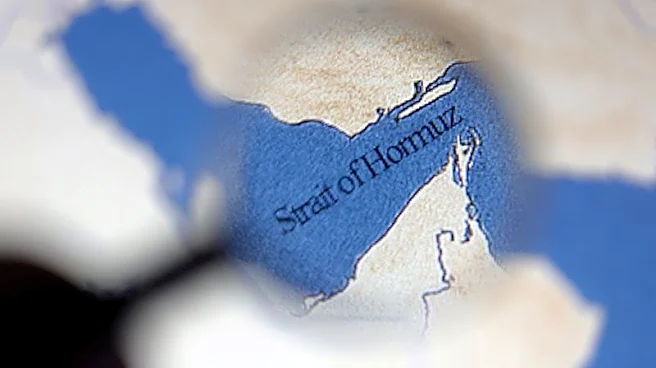
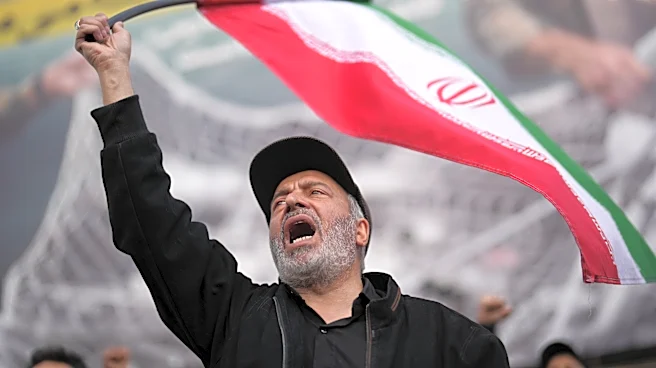
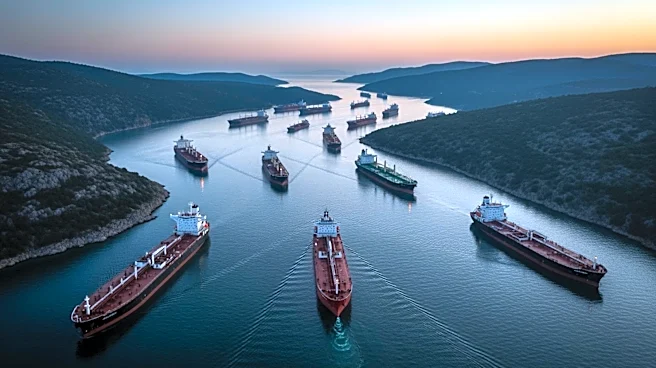
Ship tracking data reveals that the majority of vessels passing through the Strait of Hormuz are linked to Iran, despite a two-week ceasefire between Tehran and Washington. This includes a crude supertanker, a bunkering tanker, and several dry bulk ships.
The ceasefire was intended to ease tensions and allow for the resumption of normal shipping activities in the region.
Why It's Important?
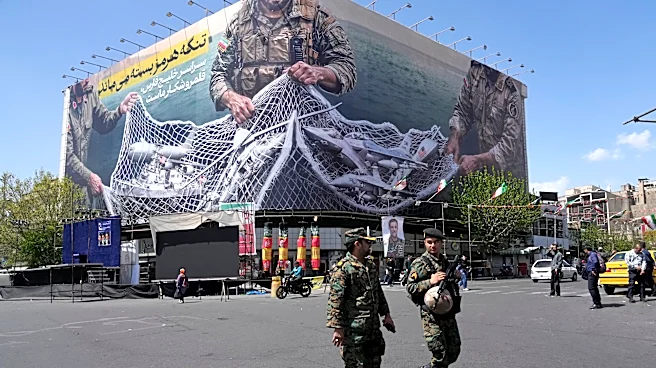
The Strait of Hormuz is a critical chokepoint for global oil transportation, and the dominance of Iranian-linked ships highlights Iran's strategic control over this vital passage. The situation affects global oil supply and prices, with potential economic implications for countries reliant on oil imports. The ceasefire's effectiveness in stabilizing the region remains uncertain, impacting international energy markets.
What's Next?
The international community, particularly oil-importing nations, will be closely watching the situation. Further diplomatic efforts may be necessary to ensure the safe passage of ships and to prevent any escalation of tensions. The outcome of the ceasefire and Iran's actions in the region will be pivotal in determining future geopolitical dynamics.