

What's Happening?
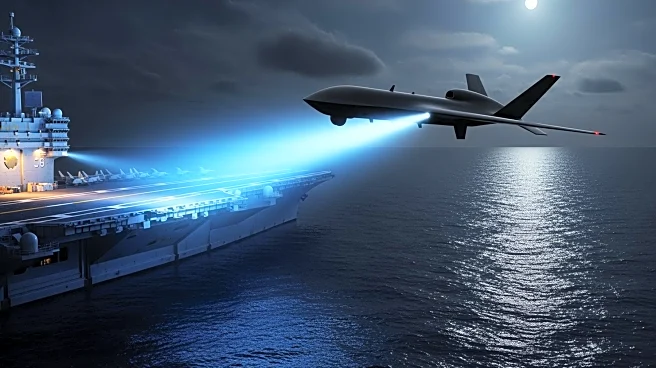
The U.S. military shot down an Iranian drone on February 3, 2026, as it approached the USS Abraham Lincoln aircraft carrier in the Arabian Sea. The drone, identified as a Shahed-139, was intercepted by an F-35C fighter jet after it continued to fly towards
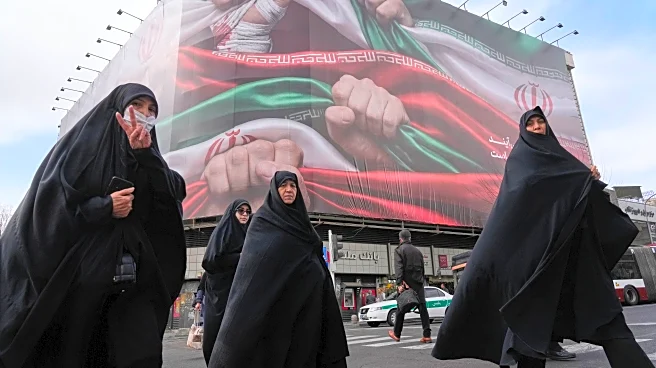
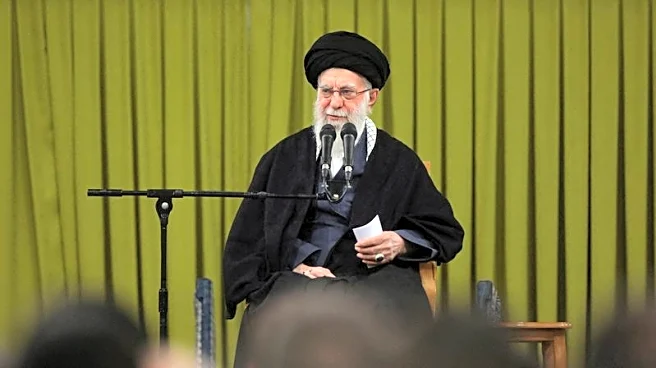
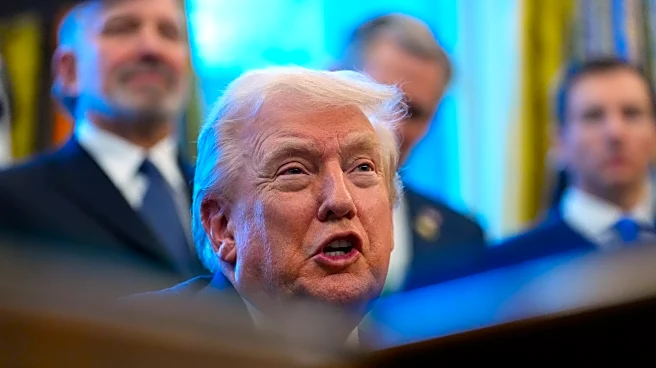
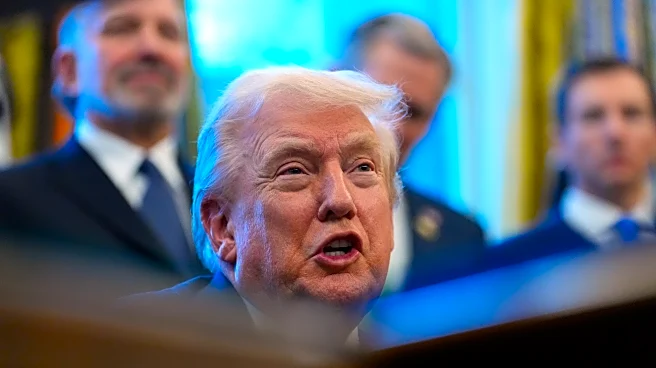
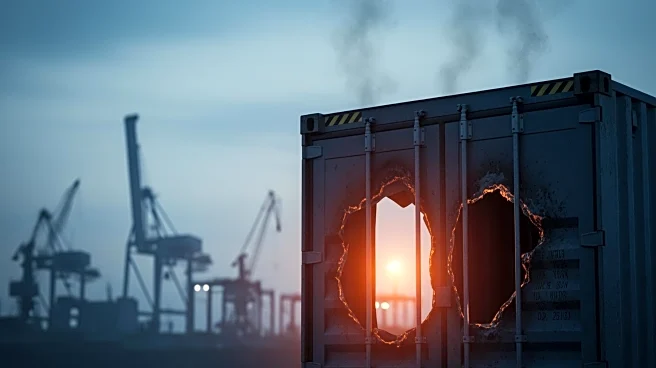
the carrier despite de-escalatory measures by U.S. forces. This incident occurred approximately 500 miles from Iran's southern coast. According to U.S. Central Command, the drone's approach was deemed aggressive and its intent unclear. The Iranian Tasnim news agency reported that the drone was on a routine reconnaissance mission in international waters and had successfully transmitted images before losing communication. This event comes amid heightened tensions between the U.S. and Iran, with President Trump considering military strikes against Iran. Additionally, a separate incident involved the harassment of a U.S.-flagged merchant vessel by the Iranian Revolutionary Guard Corps in the Strait of Hormuz.
Why It's Important?
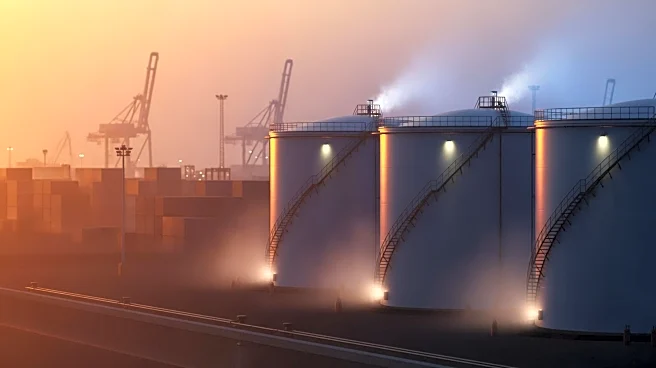
The interception of the Iranian drone underscores the escalating tensions between the U.S. and Iran, which have significant implications for regional stability and global oil markets. The Strait of Hormuz, a critical shipping lane for global oil supply, could be disrupted if hostilities increase, potentially affecting oil prices and economic stability worldwide. The U.S. military's response highlights its commitment to maintaining freedom of navigation in international waters, a stance that could deter further aggressive actions by Iran. However, the potential for military conflict remains a concern, as any escalation could lead to broader regional instability. The upcoming diplomatic talks between U.S. and Iranian officials in Turkey may provide a platform for de-escalation, but the situation remains precarious.
What's Next?
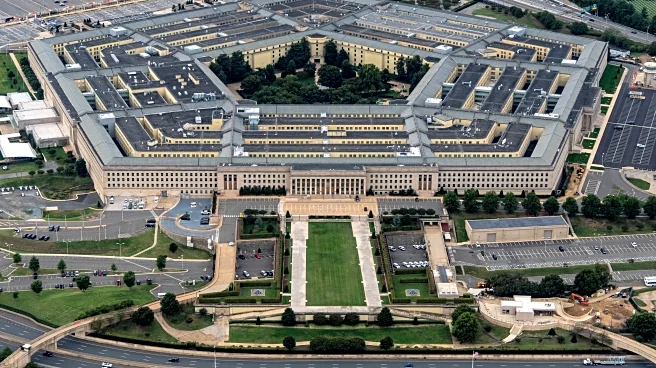
Diplomatic efforts are set to continue with talks scheduled between U.S. and Iranian officials in Turkey. These discussions could play a crucial role in de-escalating tensions and preventing further military confrontations. The U.S. military is likely to maintain a heightened state of readiness in the region, with continued monitoring of Iranian activities. The international community will be closely watching these developments, as any significant escalation could have far-reaching consequences for global security and economic stability. The outcome of the talks may influence President Trump's decision on whether to pursue military action against Iran.