






What's Happening?
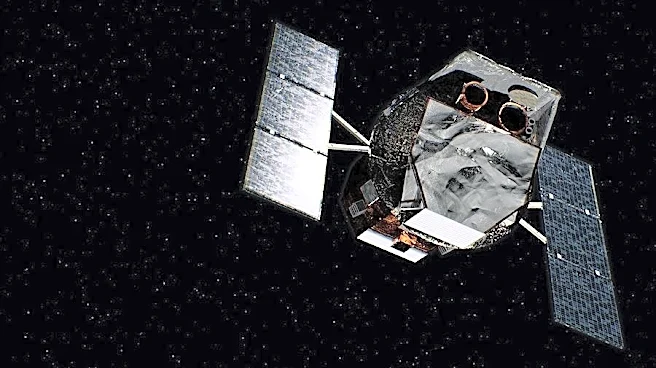
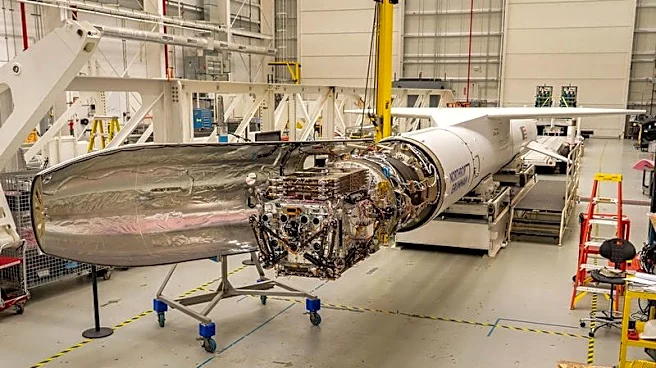
NASA has officially abandoned its mission to save the Neil Gehrels Swift Observatory from re-entering Earth's atmosphere. Despite efforts by mission specialists and Katalyst Space Technologies, who launched the Link spacecraft to capture and boost the orbital
telescope into a higher orbit, numerous complications led to the decision. The Link spacecraft, designed and built in nine months, encountered issues shortly after its journey began, including entering an uncontrollable spin. Although engineers managed to stabilize it to some extent, persistent problems prevented proper orbital positioning. The Swift Observatory, deployed in 2004, has been instrumental in astronomy for over two decades, notably glimpsing the most luminous gamma-ray burst ever seen, dubbed the BOAT (Brightest of All Time). Increased solar wind activity accelerated its orbital decay, and NASA had previously shut off its scientific instruments to delay its atmospheric re-entry. The observatory is now expected to begin its re-entry no earlier than October, though its exact descent location is unknown, and it is not anticipated to pose a threat to people on Earth.
Why It's Important?
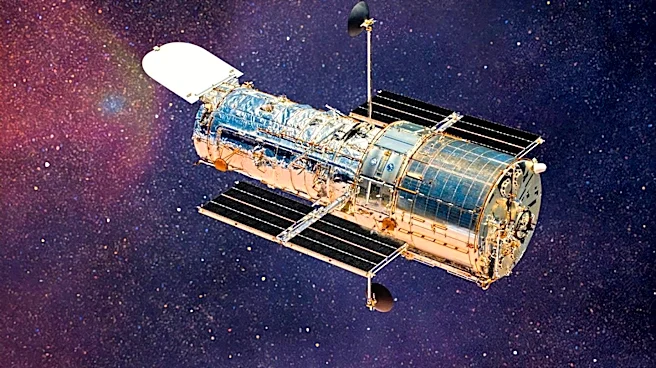
The abandonment of the Swift Observatory rescue mission highlights the significant challenges and risks associated with space debris mitigation and orbital maintenance. While the immediate impact is the loss of a valuable scientific instrument that has contributed significantly to understanding cosmic phenomena, the broader implications extend to future space operations. The mission was a high-risk, high-reward endeavor, representing a first-of-its-kind attempt to extend the life of an aging satellite through an orbital boost. The lessons learned from Link's complications will be crucial for developing future strategies for satellite servicing and debris management. This event underscores the increasing vulnerability of long-duration space assets to environmental factors like solar activity and the inherent difficulties in executing complex in-orbit maneuvers. The experience gained, even from a failed rescue, will inform the design and execution of future missions, including potential efforts to boost other critical observatories like the Hubble Space Telescope, which is also experiencing orbital decay.
What's Next?
The Neil Gehrels Swift Observatory is now projected to begin its atmospheric re-entry no earlier than October. While the exact location of its final descent is currently unknown, NASA does not anticipate it posing any threat to the public. Despite the failed rescue, NASA and Katalyst Space Technologies plan to continue guiding the Link spacecraft towards Swift. This ongoing effort aims to gather as much data as possible for future rendezvous attempts and to refine techniques for in-orbit servicing. The insights gained from this mission, even in its unsuccessful aspects, will be invaluable for planning similar future endeavors, such as a potential orbital boost for the Hubble Space Telescope, which is also facing orbital decay after 36 years of service. The focus will shift from rescue to data collection to inform future space operations and satellite longevity strategies.
Beyond the Headlines
The Swift Observatory's failed rescue mission brings to light the growing issue of space sustainability and the ethical considerations surrounding the end-of-life management of valuable space assets. As Earth's orbit becomes increasingly crowded with satellites and debris, the ability to extend the operational life of spacecraft or safely de-orbit them becomes paramount. This incident underscores the complex interplay between technological ambition, environmental factors, and the economic realities of space exploration. The 'high-risk, high-reward' nature of the mission reflects a broader trend in space engineering to push the boundaries of what is possible, even when faced with significant technical hurdles. The data collected from Link's performance, despite its failure to achieve its primary objective, will contribute to a deeper understanding of orbital mechanics and robotic servicing capabilities, potentially paving the way for more robust and reliable solutions for maintaining critical space infrastructure in the future. It also highlights the continuous challenge of balancing scientific return with the practicalities of operating in a harsh and unforgiving environment.