







What's Happening?
An exhibition in Budapest, Hungary, is bringing to life the faces of ancient Roman residents from the city of Aquincum through detailed facial reconstructions. The display, running until October 31, features hyperrealistic models created from over a dozen
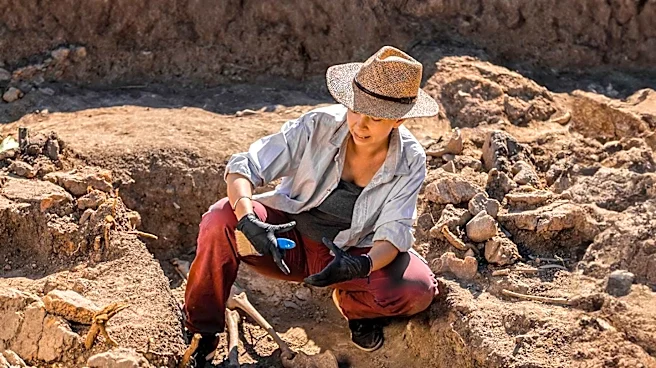
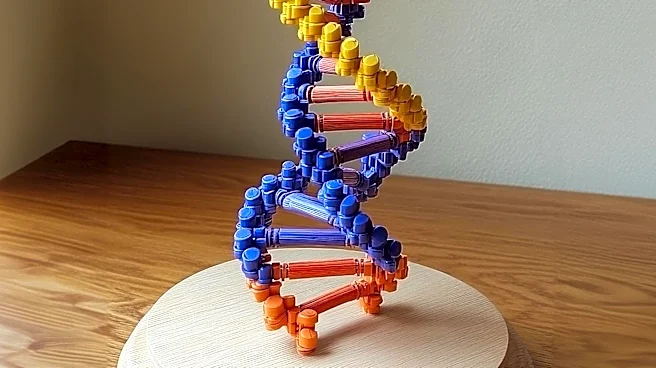
skulls found in the ancient city. Using DNA analysis and techniques from archaeology and anthropology, the exhibition aims to provide insights into the lives of these individuals nearly 2,000 years ago. The models reveal details such as skin, hair, and eye color, and even potential injuries or diseases. The exhibition, titled 'Once we were like you,' seeks to connect modern visitors with their ancient predecessors by showcasing the lives and social statuses of these Roman-era individuals.
Why It's Important?
This exhibition highlights the use of modern scientific techniques to explore historical contexts, offering a unique way to understand ancient societies. By reconstructing the faces and stories of ordinary people from the past, the exhibition provides a tangible connection to history, emphasizing the continuity of human experiences across time. It also showcases the potential of DNA analysis in archaeology, allowing for a more personalized understanding of historical populations. This approach not only enriches our knowledge of ancient Rome but also demonstrates the broader applicability of scientific methods in historical research.