







What's Happening?
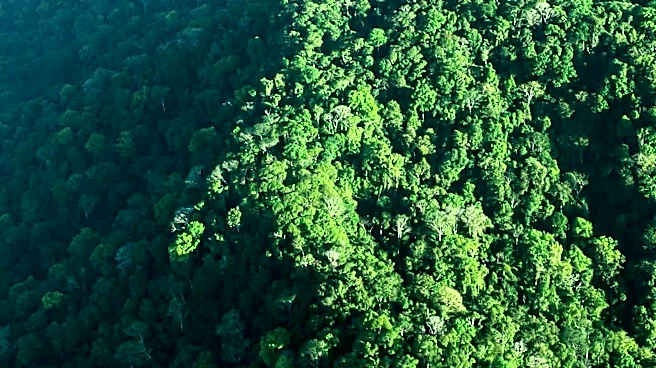
Every year, 27.7 million tons of dust from the Sahara Desert cross the Atlantic Ocean and settle on the Amazon Rainforest. This dust, rich in phosphorus, compensates for the nutrient lost through runoff, maintaining the rainforest's biological productivity.
The phenomenon was documented by NASA's CALIPSO satellite, revealing a critical ecological connection between the Sahara and the Amazon. The dust originates from the Bodélé Depression in Chad, a former lake bed rich in fossilized plankton, which provides the necessary phosphorus to sustain the Amazon's ecosystem.
Why It's Important?
This trans-Atlantic dust transport is vital for the Amazon's health, as it prevents phosphorus deficiency, which would otherwise degrade the rainforest's capacity to support its diverse life forms. Understanding this connection highlights the interdependence of global ecosystems and the importance of preserving such natural processes. The findings emphasize the need for international cooperation in environmental conservation, as changes in one region can significantly impact distant ecosystems.
What's Next?
The system's stability is not guaranteed indefinitely. Factors such as climate change, shifts in wind patterns, and changes in the Sahara's vegetation could disrupt this nutrient flow. Monitoring these variables is crucial to anticipate and mitigate potential impacts on the Amazon. Continued research and satellite observations will be essential to understand and preserve this delicate ecological balance.