





What's Happening?
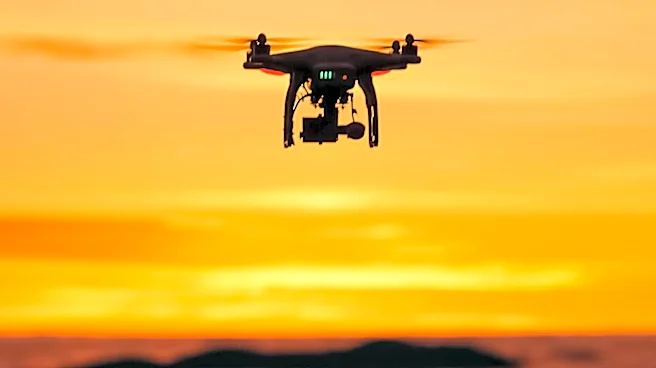
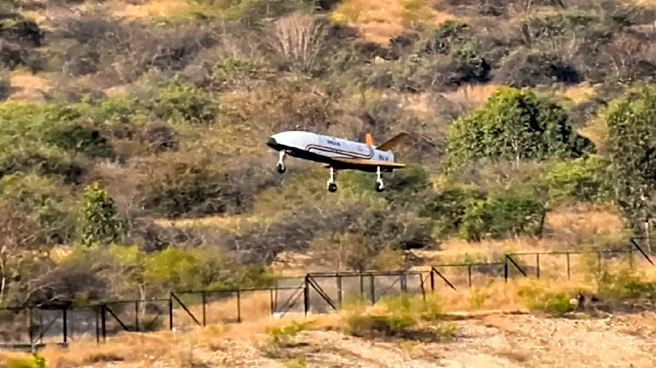
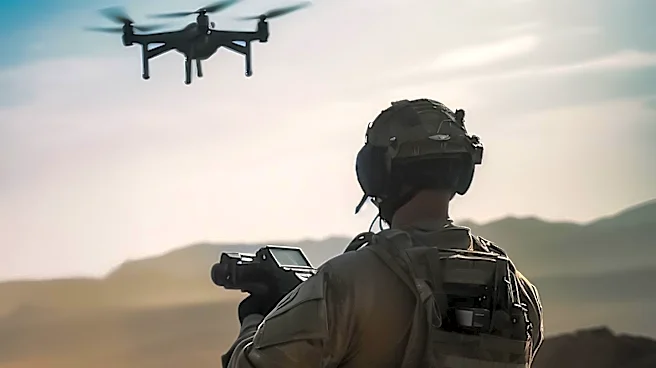
Taiwan's navy has introduced two medium-class strike drones during its largest annual military exercise, the Han Kuang, which simulates a defense against a potential Chinese invasion. These drones, resembling those used by Ukraine against Russian forces,
were showcased for the first time in a littoral combat drill on Taiwan's southwest coast. The drones, described as 'medium-size suicide drones,' are locally manufactured by Taiwan's National Chung-Shan Institute of Science and Technology. The exercise aims to enhance Taiwan's defense capabilities by employing drones that can target slow-moving vessels, a strategy inspired by Ukraine's use of similar technology to disrupt Russian supply routes. The deployment reflects Taiwan's strategic shift towards using drones to bolster its littoral defense, particularly in the challenging weather conditions of the Taiwan Strait.
Why It's Important?
The introduction of these drones signifies Taiwan's adaptation of military strategies observed in the Ukraine conflict, highlighting the global influence of modern warfare tactics. By integrating drones into its defense strategy, Taiwan aims to create a 'hellscape' for potential Chinese forces attempting to cross the Taiwan Strait. This development is crucial for Taiwan's national security, as it seeks to deter aggression from China by enhancing its military capabilities with cost-effective and technologically advanced solutions. The move also underscores the growing importance of drone warfare in modern military conflicts, potentially influencing defense policies and procurement strategies in other nations facing similar threats.
What's Next?
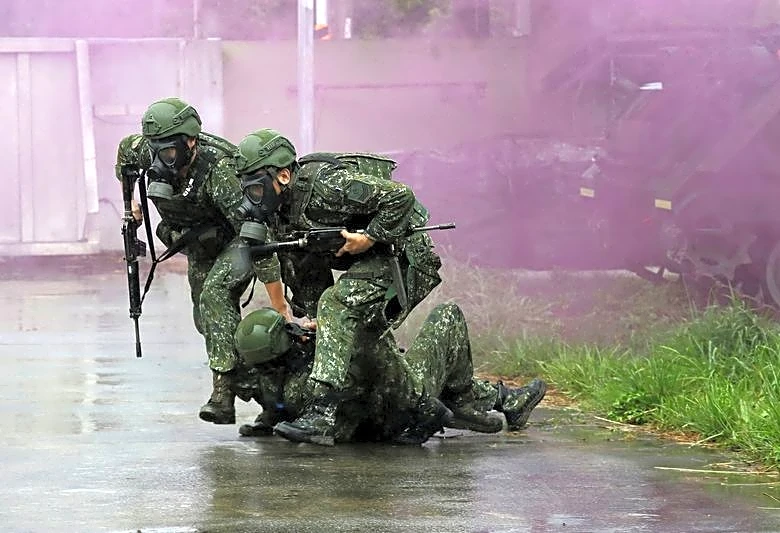
Taiwan plans to significantly increase its drone production, aiming to manufacture 100,000 drones monthly by 2030. This ambitious goal is part of a broader strategy to fortify its defenses against potential Chinese aggression. The ongoing Han Kuang exercise, which includes island-wide drills, will continue to test Taiwan's military readiness and civilian response to various scenarios, including gray-zone tactics and direct invasions. The outcome of these exercises may lead to further adjustments in Taiwan's defense policies and procurement plans, potentially influencing regional security dynamics.