


What's Happening?
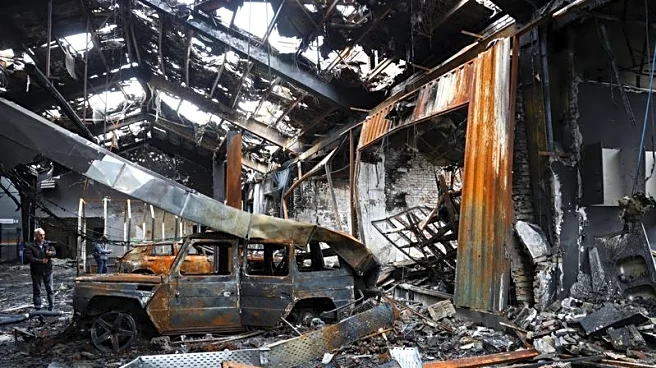
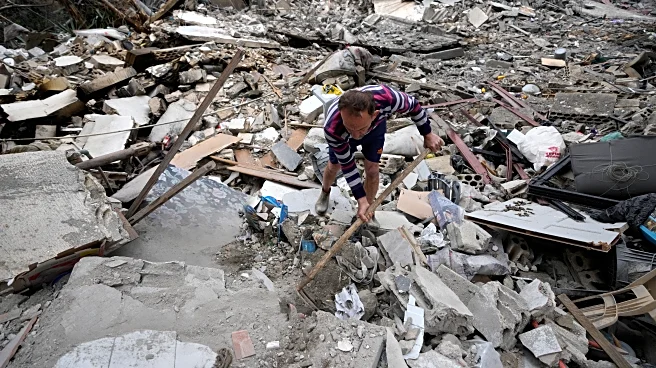
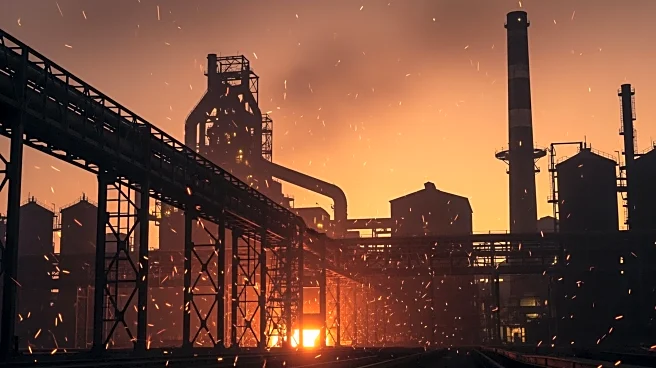
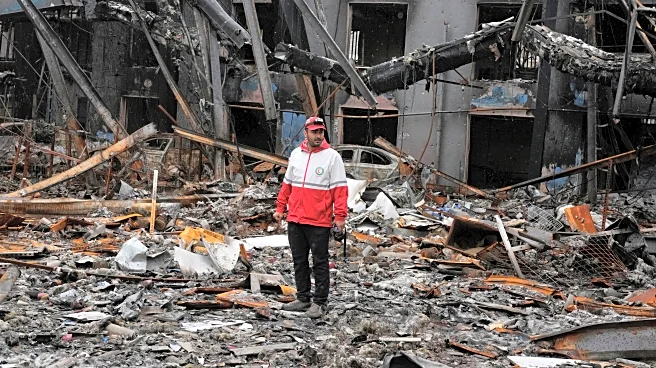
Iranian steelmakers Khouzestan Steel (KhSC) and Mobarakeh Steel (MSC) were targeted by air strikes attributed to the United States and Israel. The attacks resulted in damage to storage and power infrastructure, potentially reducing Iran's billet and slab
production and export capacity. KhSC, Iran's second-largest steelmaker, reported damage to two storage silos, though its blast furnaces were offline at the time, preventing further impact. MSC, based in Esfahan, suffered damage to a substation, an alloy steel line, and power units, which may lead to short-term production outages. The incidents follow a previous strike on Foolad Atieh, which resulted in casualties. The Iranian industry ministry confirmed partial damage and suspended operations for safety checks. The attacks have exacerbated existing gas and power shortages affecting Iranian steel producers.
Why It's Important?
The air strikes on Iranian steel plants could significantly impact Iran's steel production and export capabilities, affecting global steel markets. Iran's semi-finished steel exports, which were around 550,000 tons per month in 2024, may face disruptions, potentially leading to price fluctuations in the international market. The strikes also highlight ongoing geopolitical tensions in the region, with potential retaliatory actions by Iran against Gulf steel producers. This situation could escalate regional conflicts and affect global trade routes and energy supplies, given the strategic importance of the Gulf region.
What's Next?
Iran is reportedly preparing retaliatory strikes on steel producers in the Gulf region, including facilities in Saudi Arabia, the UAE, Qatar, Kuwait, Bahrain, and Israel. This could lead to further instability in the region, impacting not only the steel industry but also broader economic and political relations. The international community may need to engage in diplomatic efforts to prevent further escalation and ensure the stability of global steel and energy markets.