


What's Happening?
Japan and the Philippines are set to sign a memorandum of understanding (MOU) aimed at strengthening cooperation on oil stockpiling in the Southeast Asian country. Industry minister Ryosei Akazawa is expected to sign the agreement with a Philippine official
ahead of an Asia Zero Emission Community framework summit in Manila. This partnership will involve Japan's public and private sectors assisting the Philippines in developing a national oil reserve system to bolster its energy security. The MOU will cover a joint study on collaboration with oil-producing nations like Saudi Arabia and the United Arab Emirates, as well as the development of necessary systems for a national oil reserve plan. Additionally, Japanese engineering firm Chiyoda Corp. is anticipated to sign a separate MOU with Philippine National Oil for technological assistance concerning oil reserve facilities. The Philippines declared a national energy emergency in March due to Middle East turmoil and is actively working to enhance its oil supply resilience.
Why It's Important?
This agreement is crucial for the Philippines, which, like Japan, relies on the Middle East for over 90% of its crude oil imports. As of May 3, the Philippines held oil reserves equivalent to only 53 days of domestic consumption, significantly less than Japan's 207 days. The nation has previously experienced fuel shortages and supply disruptions, particularly after the de facto closure of the Strait of Hormuz. Establishing a national oil reserve system and increasing private sector stockpiles will mitigate future supply shocks and enhance the country's economic stability. Japan's involvement, potentially through its POWERR Asia framework which offers $10 billion in financial aid for energy supply networks in Asia, underscores a broader regional effort to secure energy resources and reduce vulnerability to global geopolitical events. This initiative could serve as a model for other energy-dependent nations in the region seeking to fortify their energy security.
What's Next?
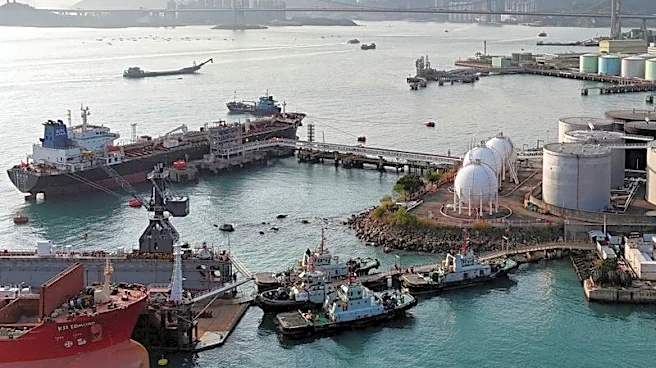
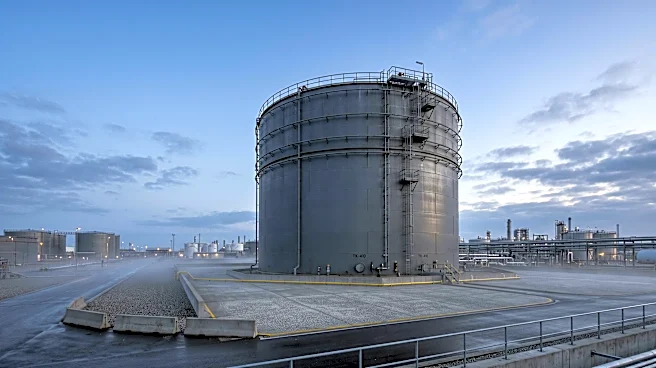
The MOU is scheduled to be signed early next week. Following the signing, joint studies will commence to explore cooperation with oil-producing countries and to develop the necessary systems for the Philippines' national oil reserve plan. The Philippines intends to construct storage tanks for national reserves, with completion targeted for 2027 and beyond, aiming to increase its oil reserves by 15 million barrels, equivalent to 30 days of consumption. Japan's POWERR Asia framework is a potential source of funding for these measures. The collaboration between Chiyoda Corp. and Philippine National Oil will also move forward, focusing on technological assistance for the new oil reserve facilities. These steps indicate a sustained effort to build a robust energy infrastructure in the Philippines, with ongoing support from Japan.
Beyond the Headlines
This partnership extends beyond immediate energy security concerns, reflecting a strategic alignment between Japan and the Philippines in the broader context of regional stability and economic resilience. By helping the Philippines establish a national oil reserve, Japan is not only fostering bilateral ties but also contributing to the collective energy security of the Asia-Pacific region. This initiative could reduce the Philippines' susceptibility to global oil price volatility and supply chain disruptions, which have significant economic and social implications. Furthermore, it highlights a growing trend among nations to diversify energy partnerships and build strategic reserves as a buffer against geopolitical uncertainties. The technological assistance from Japanese firms also signifies a transfer of expertise, potentially enhancing the Philippines' industrial capabilities in energy infrastructure development and management.