







What's Happening?
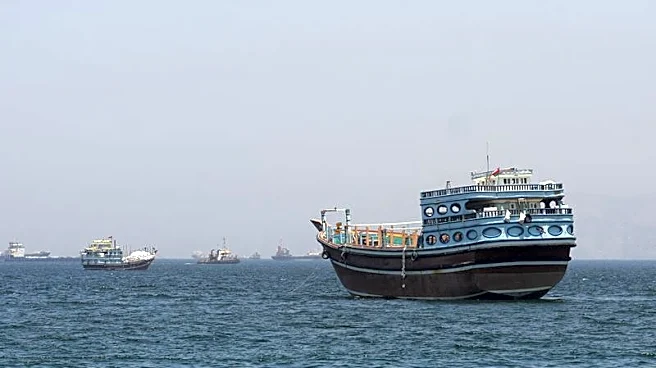
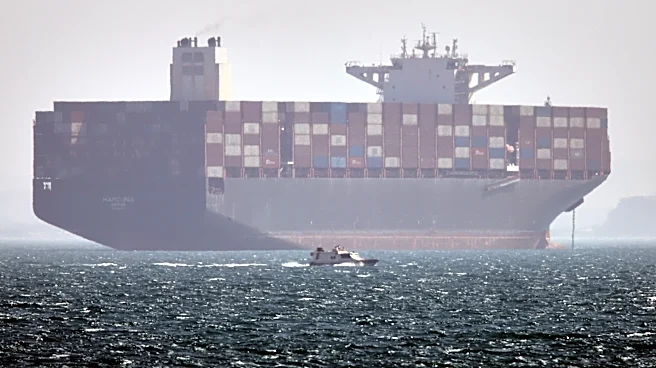
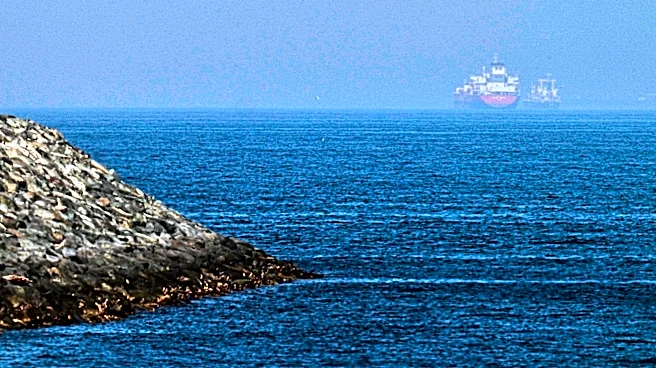
The US Navy has taken decisive action against an Iranian-flagged oil tanker attempting to breach the blockade of the Strait of Hormuz. According to the US Central Command (CENTCOM), the vessel ignored multiple warnings from American forces before being
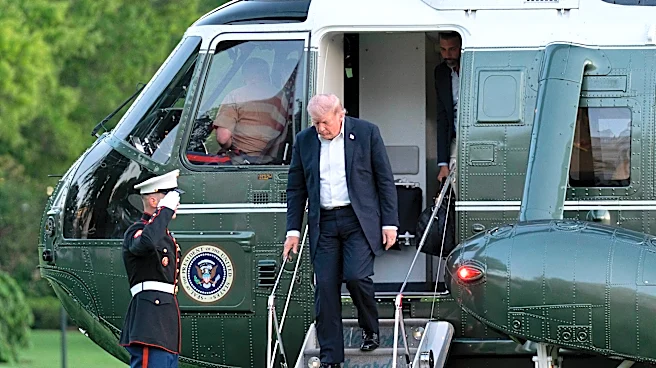
targeted by 20 mm cannon fire from a US Navy F/A-18 Super Hornet. This incident is part of ongoing tensions between the US and Iran, with the blockade remaining firmly in place as diplomatic negotiations continue. President Trump has expressed confidence in reaching a deal with Iran, setting a one-week deadline for negotiations. The US is awaiting a response from Iran on a proposed memorandum of understanding, which aims to end hostilities and initiate a 30-day negotiation period.
Why It's Important?
This development underscores the heightened tensions in the Gulf region, particularly concerning the strategic Strait of Hormuz, a critical chokepoint for global oil shipments. The US's enforcement of the blockade highlights its commitment to maintaining pressure on Iran amid ongoing diplomatic efforts. The situation has significant implications for international oil markets and regional stability. A successful negotiation could lead to a de-escalation of military activities and a potential easing of economic sanctions on Iran, impacting global oil prices and economic relations. Conversely, failure to reach an agreement could exacerbate tensions, leading to further military confrontations and disruptions in oil supply routes.
What's Next?
The immediate focus is on the diplomatic front, with the US awaiting Iran's response to the proposed memorandum. If Iran agrees to the terms, it could pave the way for a reduction in hostilities and a more stable geopolitical environment in the region. However, if negotiations falter, the US may continue to enforce the blockade and potentially increase military presence in the area. The international community, particularly countries reliant on oil from the Gulf, will be closely monitoring the situation, as any escalation could have far-reaching economic and security implications.