






What's Happening?
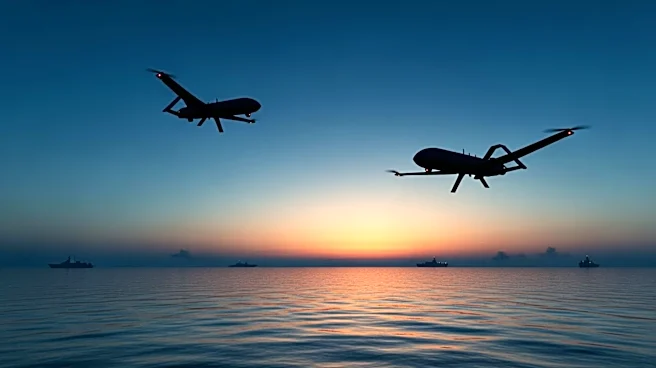
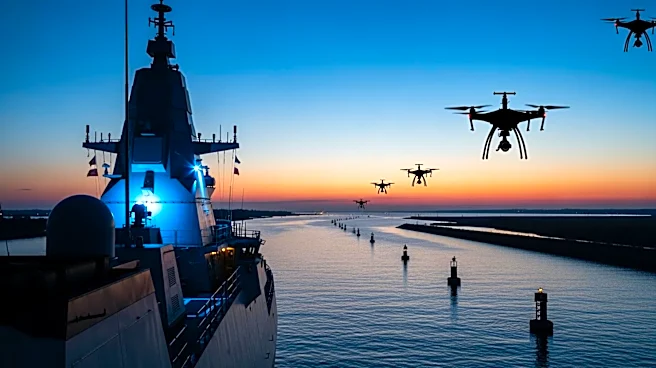
The United States military, under the command of US Central Command (CENTCOM), successfully intercepted two Iranian one-way attack drones that posed a threat to international maritime traffic in the Strait of Hormuz. This action was part of a broader
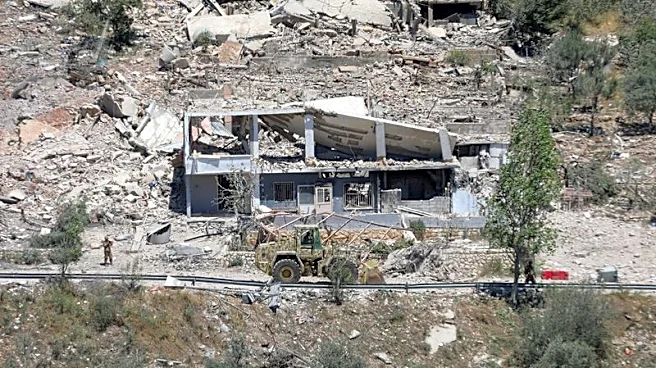
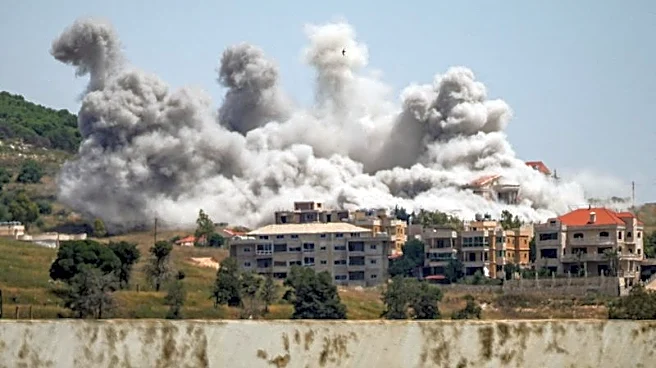
defensive operation in response to multiple ballistic missiles and drones launched by Iran towards Kuwait, Bahrain, and the Strait of Hormuz. CENTCOM reported that six of these missiles were intercepted, while a seventh failed to reach its target. Following the interception of the drones, the US conducted strikes on Iranian military radar sites located in Goruk and on Qeshm Island. These military actions come amid ongoing negotiations between Washington and Tehran aimed at reaching a comprehensive deal to end hostilities and reopen the strait to international shipping.
Why It's Important?
The Strait of Hormuz is a critical chokepoint for global oil shipments, and any threat to its security can have significant implications for international trade and energy markets. The US military's actions to intercept Iranian drones underscore the ongoing tensions between the US and Iran, particularly in the strategically vital Persian Gulf region. The interception of these drones and subsequent strikes on Iranian radar sites highlight the US's commitment to maintaining the security of international maritime routes. This development could influence diplomatic relations and negotiations between the US and Iran, potentially impacting global oil prices and regional stability.
What's Next?
The situation in the Strait of Hormuz remains tense, with potential for further military engagements if Iranian forces continue to pose threats to maritime traffic. The US and its allies may increase their military presence in the region to deter further aggression. Diplomatic efforts are likely to continue as both nations seek to reach a resolution that ensures the security of the strait and addresses broader geopolitical concerns. The international community will be closely monitoring these developments, as any escalation could have far-reaching consequences for global trade and energy security.