

What's Happening?
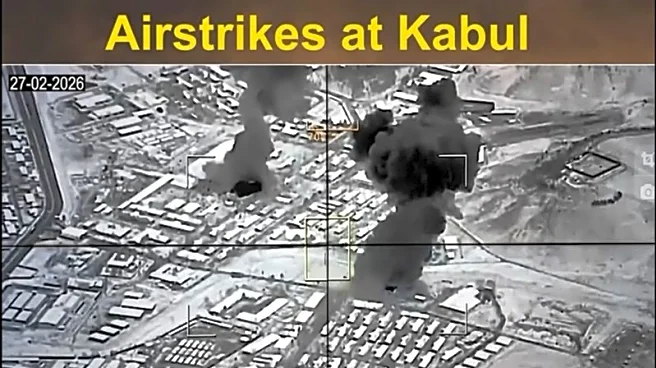
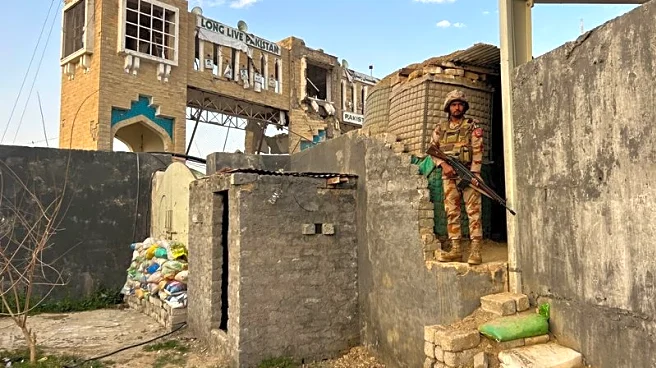
The U.S. Mission to Afghanistan has issued a security alert to its citizens following the outbreak of open conflict between Afghanistan and Pakistan. The alert highlights recent Pakistani airstrikes in Afghanistan and reports of ongoing military activity
in Afghan airspace. The conflict has led to the closure of major border crossings between the two countries. The U.S. State Department has maintained a level four travel advisory for Afghanistan, advising against all travel due to risks including civil unrest, terrorism, and limited health facilities. The U.S. Embassy in Kabul has been closed since 2021, and the U.S. government is unable to provide consular services to its citizens in Afghanistan. The Taliban regained control of Afghanistan in 2021 after the U.S. military withdrawal, and tensions with Pakistan have been escalating, culminating in the current conflict.
Why It's Important?
The escalation of conflict between Afghanistan and Pakistan poses significant geopolitical risks, particularly for regional stability in South Asia. The U.S. travel advisory underscores the dangers for American citizens and highlights the broader security concerns in the region. The conflict could disrupt trade and economic activities, affecting both countries' economies and potentially leading to a humanitarian crisis. The involvement of militant groups like the Tehreek-e-Taliban Pakistan (TTP) further complicates the situation, as these groups have historically targeted both civilian and military sites, increasing the risk of widespread violence. The conflict also challenges international diplomatic efforts to stabilize the region, as previous peace talks have failed to yield lasting solutions.
What's Next?
The immediate future may see continued military engagements between Afghanistan and Pakistan, with potential for further escalation if diplomatic interventions are not successful. International stakeholders, including neighboring countries and global powers, may seek to mediate to prevent a full-scale war. Humanitarian organizations might prepare for potential refugee flows and increased humanitarian needs in the region. The U.S. and other countries may reassess their diplomatic and military strategies in South Asia, considering the implications of the conflict on regional and global security.
Beyond the Headlines
The conflict highlights the complex interplay of regional politics, historical grievances, and militant activities that have long plagued Afghanistan and Pakistan. The Durand Line, a contentious border demarcation, remains a flashpoint for disputes. The situation also raises questions about the effectiveness of international peacekeeping and mediation efforts in conflict zones. The resurgence of militant activities could lead to increased scrutiny of counterterrorism strategies and the role of regional powers in supporting or combating these groups.