
What's Happening?
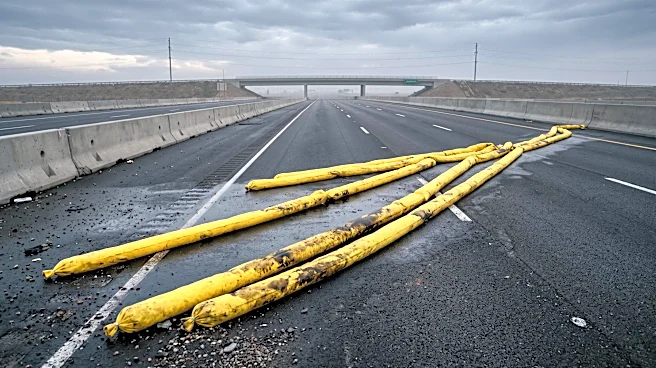
A multi-vehicle crash involving a tractor-trailer on the Capital Beltway’s Inner Loop in Montgomery County, Maryland, resulted in a significant fuel spill and hazardous road conditions. The incident occurred
on Interstate 495 between University Boulevard and New Hampshire Avenue, near Exit 29, on Monday afternoon. According to Montgomery County Fire and Rescue spokesperson Pete Piringer, emergency medical crews evaluated approximately 20 people at the scene, with two or three individuals likely requiring hospital transport, though no transports were confirmed in the updates. The fuel spill, initially reported as covering 500 to 1,000 feet of the right lane, necessitated the involvement of hazardous materials crews. The crash and spill led to significant traffic delays, with backups extending up to six miles at one point.
Why It's Important?
This incident highlights the critical safety and logistical challenges posed by large-scale traffic accidents, particularly those involving commercial vehicles and hazardous materials. The fuel spill created immediate environmental and safety risks, requiring specialized hazmat response and extensive road closures. The evaluation of 20 individuals and potential hospital transports underscore the human cost of such events, ranging from injuries to significant disruption of daily routines for commuters. The extensive traffic delays on a major artery like the Capital Beltway demonstrate the ripple effect these incidents have on regional transportation networks, impacting productivity, emergency response times, and overall economic activity. For Montgomery County, it represents a significant strain on emergency services and traffic management resources.
What's Next?
Following the incident, all lanes on the Capital Beltway’s Inner Loop were reopened, and the vehicles and fuel spill were cleared by 5:40 p.m. on Monday. This indicates a swift and effective response from emergency services and road crews to restore normal traffic flow. However, the aftermath of such an event often involves investigations into the cause of the crash and the extent of any environmental impact from the fuel spill. Authorities will likely review the incident to identify any contributing factors and assess potential improvements in emergency response protocols or infrastructure. For the individuals involved, follow-up medical care and insurance claims will be immediate next steps. The event serves as a reminder for commuters to stay informed about traffic conditions and for transportation authorities to maintain robust emergency response capabilities.
Beyond the Headlines
Beyond the immediate traffic disruptions and emergency response, this incident brings to light broader issues concerning infrastructure resilience and the management of hazardous materials transport on major roadways. The Capital Beltway is a vital transportation corridor, and any prolonged closure or hazardous event has far-reaching consequences for the entire Washington D.C. metropolitan area. The involvement of a tractor-trailer and a fuel spill underscores the inherent risks associated with commercial freight transport, prompting questions about vehicle maintenance, driver regulations, and emergency preparedness for such scenarios. Furthermore, the incident highlights the interconnectedness of urban systems, where a single event can trigger a cascade of effects across public safety, environmental protection, and economic activity. It reinforces the ongoing need for investment in infrastructure, advanced traffic management systems, and comprehensive emergency planning to mitigate the impact of such unforeseen events.