




What's Happening?
John Floreancig and Jonathan Stewart, legal professionals, assert that legal assistance is a crucial, though often overlooked, aspect of natural disaster response. While first responders, emergency management officials, and non-profits address immediate
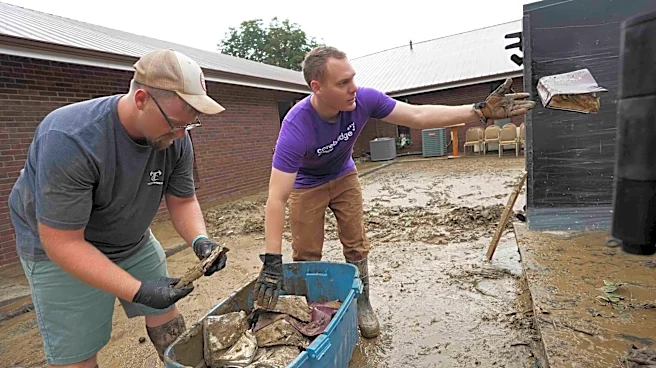
needs like rescue, shelter, food, and power restoration, legal issues frequently emerge once the initial crisis subsides. Natural disasters, such as floods, can rapidly escalate existing legal problems or create new ones for affected individuals and families. For instance, a seemingly straightforward flooded rental property can lead to complex questions regarding tenant rights, property habitability, remediation responsibilities, landlord access, disposal of belongings, insurance claims (including renters' and flood insurance), and eligibility for aid from FEMA or other relief programs. These issues require specialized legal knowledge to navigate, extending beyond the immediate provision of basic necessities.
Why It's Important?
The integration of legal services into disaster response is vital because it addresses the long-term stability and recovery of affected communities. Without proper legal guidance, individuals and families can face significant financial and personal setbacks, including displacement, insurance disputes, lost wages, and substantial property damage. The complexities of insurance policies, lease agreements, and government aid programs can be overwhelming for those already traumatized by a disaster. Legal professionals help clarify rights and responsibilities, ensure fair treatment, and facilitate access to available resources, preventing further hardship. This support is critical for ensuring that recovery is comprehensive, allowing individuals to rebuild their lives and communities to regain their footing, rather than being mired in protracted legal battles or financial instability.
What's Next?
As communities continue to recover from natural disasters, there will be an ongoing need for legal professionals to assist with the myriad of issues that arise. This includes helping individuals understand their insurance policies, navigate claims processes, address landlord-tenant disputes, and apply for federal and state disaster relief. The legal community, alongside emergency management and social services, will need to continue recognizing and integrating legal aid as an essential component of disaster preparedness and response. This may involve establishing clearer protocols for legal aid deployment during and after disasters, increasing public awareness of available legal resources, and fostering collaboration between legal aid organizations and other disaster relief entities to ensure a holistic approach to recovery.
Beyond the Headlines
The emphasis on legal assistance in disaster response highlights a broader societal challenge: the disproportionate impact of natural disasters on vulnerable populations. Those with limited resources or understanding of legal frameworks are often the most susceptible to exploitation or further disadvantage in the aftermath of a disaster. Integrating legal aid into the core of disaster response can help level the playing field, ensuring that all individuals, regardless of their socio-economic status, have access to the information and representation needed to protect their rights and facilitate their recovery. This perspective also encourages a more proactive approach to disaster preparedness, where legal considerations are factored in alongside physical and logistical planning, ultimately contributing to more resilient and equitable communities.