




What's Happening?
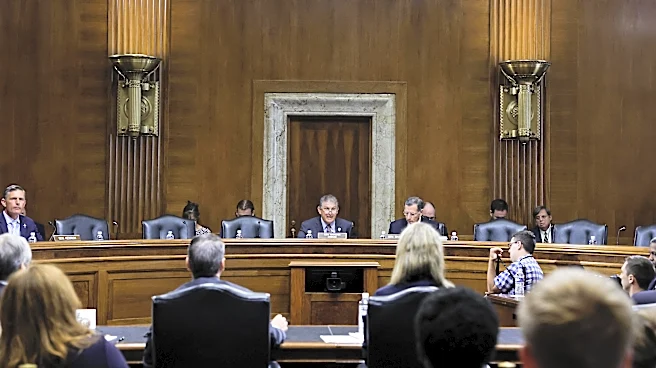
The U.S. Senate recently passed the Weather Research and Forecasting Innovation Reauthorization (WEATHER) Act of 2026 by unanimous consent. This comprehensive legislative package aims to modernize weather forecasting and research. Included within this
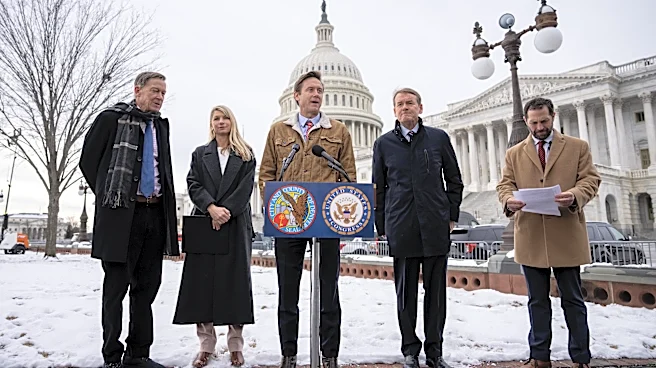
package is the bipartisan Water Research Optimization Act of 2025, co-led by U.S. Sen. Katie Britt (R-Montgomery) and U.S. Sen. Peter Welch (D-Vt.). This specific legislation seeks to streamline and enhance hydrological forecasting by officially establishing the National Water Center in Tuscaloosa as the primary hub for coordinating flood forecasting and model development across various federal agencies. Senator Britt emphasized that the work at the National Water Center is crucial for communities nationwide in preparing for floods, droughts, and severe weather events.
Why It's Important?
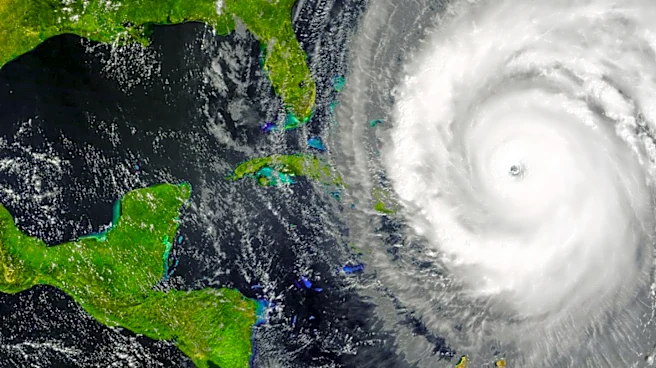
This legislative action is significant because water-related disasters, particularly flooding, pose persistent and costly threats across the United States, causing an average of $8 billion in damages annually and claiming more lives than any other weather hazard. By codifying the National Water Center and placing the National Weather Service’s 13 River Forecast Centers under the direct supervision of the Office of Water Prediction, the act aims to improve the nation's resilience to these threats through better coordination and advanced forecasting. The legislation also codifies the National Oceanic and Atmospheric Administration’s (NOAA) Cooperative Institute for Research in Operations to Hydrology (CIROH) at the University of Alabama, ensuring long-term planning for critical research in areas like hurricane intensity forecasting, drought and wildfire monitoring, and storm surge prediction. This bipartisan effort highlights a shared understanding of the urgent need for enhanced water management and forecasting capabilities.
What's Next?
Following its unanimous passage in the Senate, the WEATHER Act of 2026, including the Water Research Optimization Act of 2025, now moves to the U.S. House of Representatives for consideration. Senator Britt has urged the House to take up the bill without delay to ensure it can be signed into law promptly. If passed by the House and enacted, the legislation will lead to a more integrated and efficient national system for hydrological forecasting and water resource management. This would involve increased coordination among federal agencies and continued research efforts at institutions like the National Water Center and CIROH, potentially leading to more accurate predictions and better preparedness for water-related disasters across the country.
Beyond the Headlines
The passage of this act underscores a growing recognition of the critical role of scientific research and inter-agency cooperation in addressing complex environmental challenges. Beyond immediate disaster preparedness, improved hydrological forecasting has broader implications for agriculture, urban planning, infrastructure development, and public health. The codification of research centers like the National Water Center and CIROH provides stability and long-term funding certainty, fostering innovation and expertise in a vital scientific field. This bipartisan legislative success also serves as an example of how collaboration across political divides can yield tangible benefits for national security and economic stability, particularly in areas directly impacted by climate patterns and natural disasters. It highlights the importance of investing in scientific infrastructure to protect communities and resources.