







What's Happening?
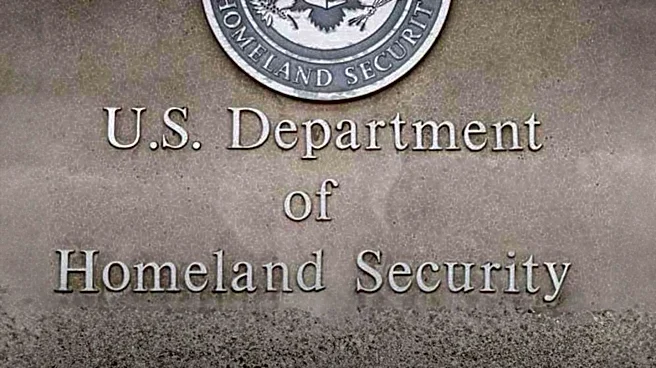
The Department of Homeland Security (DHS) has announced a new policy that will withhold a portion of federal anti-terrorism funding from states unless they comply with election rule changes supported by the Trump administration. This move is part of a broader
effort to reshape election policy through federal funding. The new requirements include the use of hand-marked paper ballots, voter-verifiable paper records, and proof of U.S. citizenship for voter registration. DHS Secretary Markwayne Mullin emphasized that these measures are intended to protect election systems from threats such as foreign interference and cyberattacks. Critics argue that the administration is using these funds to influence how states conduct their elections, potentially undermining voter confidence.
Why It's Important?
This policy could significantly impact how states administer elections, particularly in the lead-up to the 2026 midterms. By tying federal funding to election security measures, the Trump administration is exerting pressure on states to adopt specific election practices. This could lead to legal challenges, as election administration has traditionally been governed by state law, with Congress setting federal standards. The financial implications are substantial, with states potentially losing up to 20% of their Homeland Security Grant Program funding if they do not comply. This policy may disproportionately affect states that do not already meet the outlined standards, potentially leading to further political and legal disputes.
What's Next?
The policy is likely to face legal challenges, as courts have previously questioned the executive branch's authority to impose new funding conditions not clearly authorized by statute. States that oppose the new requirements may seek judicial intervention to prevent the withholding of funds. The outcome of such legal battles could set important precedents regarding the balance of power between federal and state governments in election administration. Additionally, the policy's implementation could influence the political landscape, as states navigate the financial and legal ramifications of compliance or resistance.