


What's Happening?
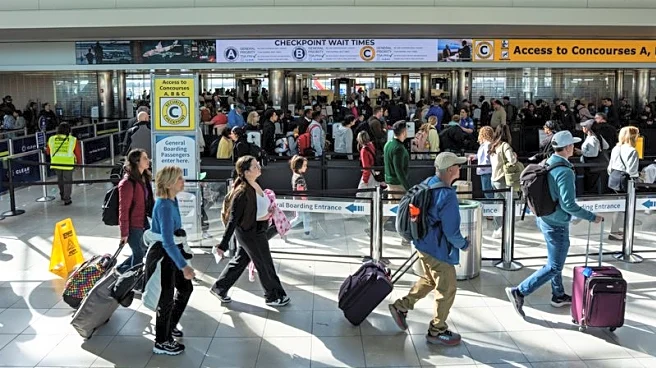
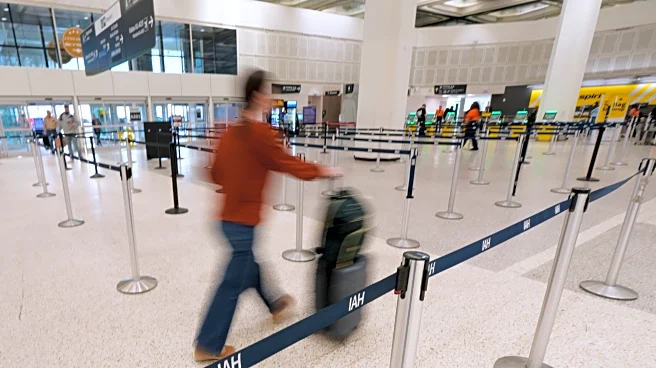
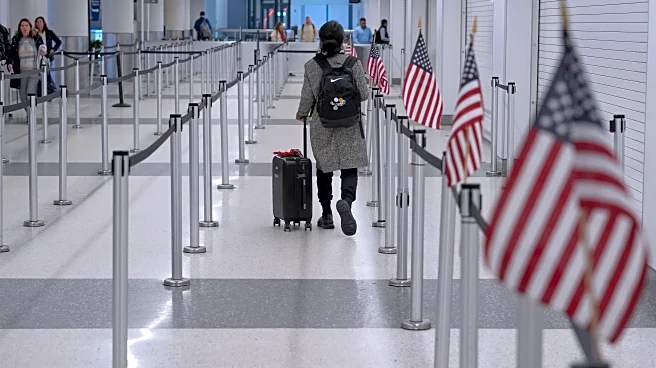
Amid a partial government shutdown, TSA lines have become significantly longer, with some wait times exceeding four hours. This has led to airlines implementing more lenient rebooking policies to accommodate affected passengers. The shutdown has resulted
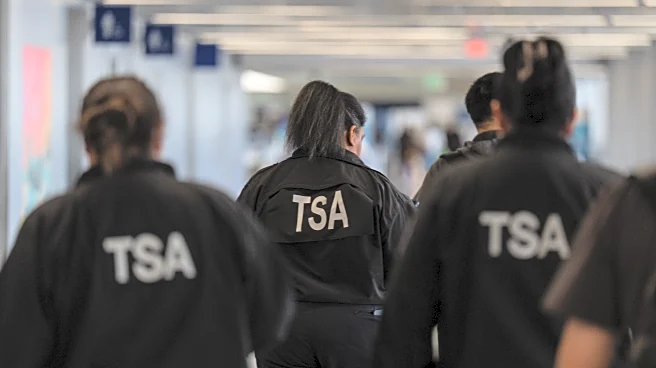
in TSA workers operating without pay, causing increased call-outs and resignations. In response, some airlines are allowing passengers to adjust their flights without additional fees, particularly at major airports like Atlanta and Houston. The situation has been exacerbated by the high volume of travelers during the spring break season, with many flights operating at full capacity.
Why It's Important?
The extended TSA wait times and subsequent flight disruptions highlight the broader impact of government shutdowns on public services and the travel industry. Airlines are attempting to mitigate the inconvenience by offering flexible rebooking options, but the situation underscores the vulnerability of air travel infrastructure to political and administrative challenges. The financial strain on TSA workers and the operational challenges faced by airlines could have long-term implications for employee morale and customer satisfaction. Additionally, the situation raises questions about the sustainability of current airport security staffing models during periods of political instability.
What's Next?
As the government seeks solutions to end the shutdown, travelers are advised to check TSA wait times and consider alternative travel arrangements, such as driving or taking a train, if feasible. Airlines may continue to adjust their policies to better accommodate passengers, but the resolution of the shutdown will be crucial in restoring normal operations. Stakeholders, including government officials and airline executives, will likely engage in discussions to prevent similar disruptions in the future.