



What's Happening?
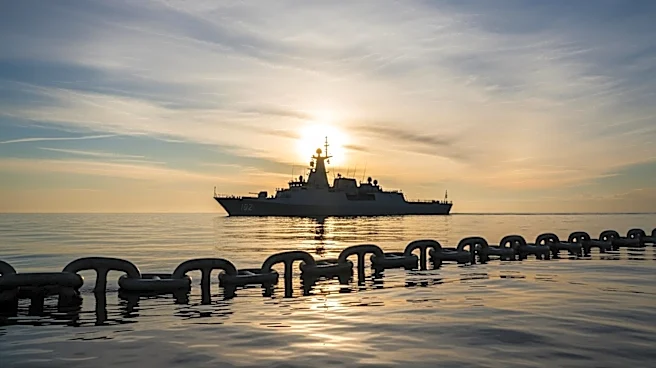
President Donald Trump is facing renewed challenges in his dealings with Iran as Tehran has reimposed a blockade on the Strait of Hormuz. This move comes after Trump announced that the U.S. would maintain its naval blockade of Iranian ports until transactions
with Iran are fully completed. The situation escalated when the Islamic Revolutionary Guard Corps reportedly fired at a tanker attempting to pass through the strait. The closure of this vital waterway, crucial for oil shipments, marks a significant setback for Trump's foreign policy efforts. A White House Situation Room meeting was convened to address the crisis, with concerns that the conflict could reignite if peace talks do not progress.
Why It's Important?
The Strait of Hormuz is a critical chokepoint for global oil transportation, and its closure could have severe implications for international energy markets and global economic stability. The renewed tensions highlight the fragile nature of U.S.-Iran relations and the potential for conflict to disrupt global trade. The situation underscores the complexities of international diplomacy and the challenges faced by the Trump administration in navigating geopolitical tensions. The outcome of this crisis could influence U.S. foreign policy and its approach to Middle Eastern affairs.
What's Next?
The U.S. and Iran may engage in further diplomatic negotiations to resolve the blockade and prevent escalation. The international community, including key stakeholders like China and European nations, may play a role in mediating the conflict. The situation will require careful management to avoid further disruptions to global oil supplies and to maintain regional stability. The potential for military engagement remains a concern, and the U.S. may need to reassess its strategic priorities in the region.