



What's Happening?
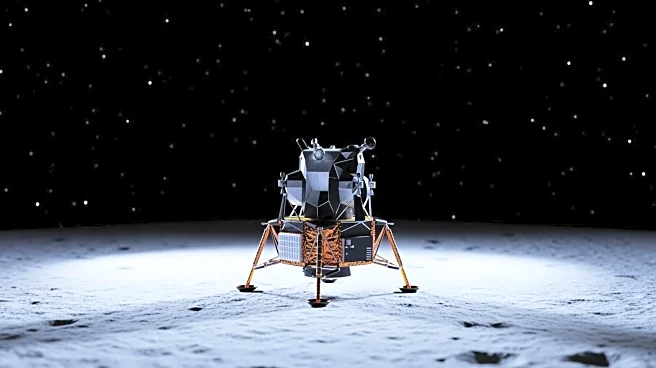
Apollo 17, launched on December 7, 1972, marked the final mission of NASA's Apollo program. The mission was notable for including Harrison 'Jack' Schmitt, the first geologist and 'scientist-astronaut' in the U.S. astronaut corps, which had previously
been dominated by military and test pilots. The mission's landing site, Taurus-Littrow, was chosen for its geological diversity, featuring mountains, volcanic and impact events, and a fault line scarp. Schmitt's expertise allowed the mission to explore this complex lunar landscape effectively, delivering significant scientific outcomes. The mission aimed to reassert the Apollo program's scientific and public value amid waning interest and in anticipation of future initiatives like the joint USSR mission, Skylab, and the space shuttle.
Why It's Important?
Apollo 17's success was crucial in demonstrating the scientific value of the Apollo program, which had cost $26 billion. The inclusion of a scientist-astronaut like Schmitt highlighted the shift towards more scientifically driven space exploration. The mission's achievements helped justify the program's expenses to scientists, politicians, and the public, reinforcing the importance of scientific research in space exploration. This mission set the stage for future collaborations and technological advancements, such as the space shuttle and international partnerships in space exploration.
What's Next?
Following Apollo 17, NASA focused on new initiatives, including a joint mission with the USSR, the launch of Skylab, and the development of the space shuttle. These projects aimed to continue the momentum of space exploration and foster international cooperation. The success of Apollo 17 underscored the potential for scientific discovery in space, influencing future missions and the direction of NASA's programs.