





What's Happening?
Vermont Governor Phil Scott, alongside Vermont Agency of Natural Resources Secretary Julie Moore and Vermont Agency of Agriculture Food and Markets Secretary Anson Tebbetts, participated in a 'Capital for a Day' event in Franklin County, Vermont. During
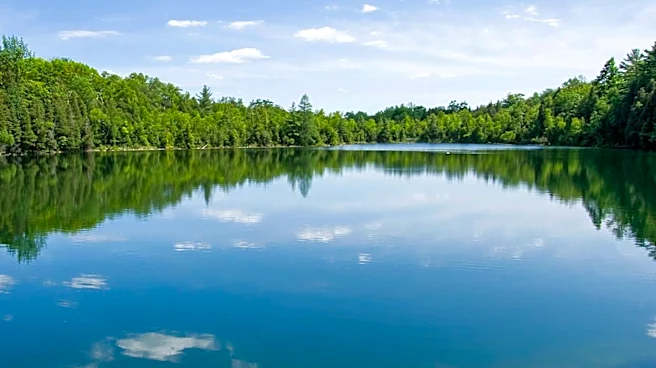
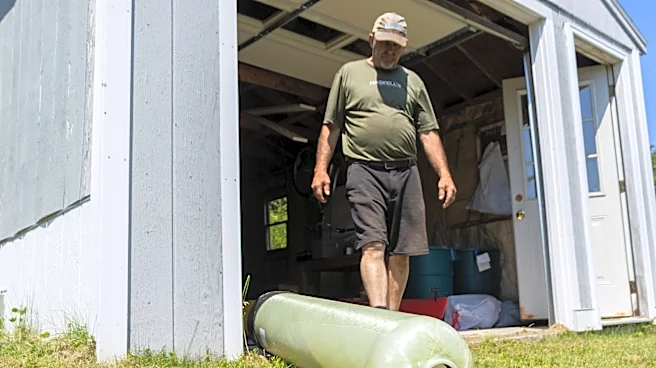
this event, Mark Mitchell, Lake Champlain Sea Grant Lake Monitoring and Community Outreach Coordinator, presented water quality samples from Lake Carmi, collected through Vermont’s Lay Monitoring Program. This initiative highlighted the crucial role of community-based monitoring in the ongoing lake restoration efforts. Lake Carmi, a 1,375-acre lake, has faced recurring cyanobacteria blooms for decades, leading to reduced water clarity, foul odors, and the production of toxins that necessitate beach closures and swimming advisories. In 2008, the Vermont Department of Environmental Conservation classified Lake Carmi as 'impaired' due to phosphorus levels, prompting a restoration plan to mitigate phosphorus entering the lake. A significant step in this plan was an aluminum sulfate (alum) treatment last fall, aimed at addressing persistent internal phosphorus loading that fueled these blooms. The treatment has shown promising results, with Secchi disk depth nearly doubling compared to previous years, indicating improved water quality.
Why It's Important?
The engagement of Governor Phil Scott and state agencies in the Lake Carmi restoration efforts underscores the state's commitment to environmental protection and public health. Cyanobacteria blooms pose significant ecological and economic threats, impacting recreational activities, local tourism, and potentially human health through toxin production. The success of community-based monitoring programs, like Vermont's Lay Monitoring Program, demonstrates the effectiveness of citizen science in environmental management and data collection. The alum treatment in Lake Carmi, a method proven effective in other lakes, represents a substantial investment in long-term water quality improvement. This initiative serves as a model for collaborative environmental governance, involving state officials, local communities, and scientific experts. The improved water quality in Lake Carmi could lead to a resurgence in local recreational activities and economic benefits for the surrounding communities, while also setting a precedent for addressing similar environmental challenges in other U.S. lakes.
What's Next?
The ongoing monitoring of Lake Carmi's water quality will be crucial to assess the long-term effectiveness of the alum treatment, which is expected to be effective for 10 to 15 years. Continued collaboration between state agencies, local communities, and scientific organizations will be essential for sustaining the improvements and adapting to any new environmental challenges. The Lake Champlain Sea Grant is also making multilingual cyanobacteria warning signs available to beach managers, watershed organizations, and community leaders. These signs, available in eight languages, aim to improve public awareness and ensure more people have access to information about cyanobacteria blooms and beach conditions. This proactive approach to public education and safety will help mitigate risks associated with future blooms. The success of Lake Carmi's restoration could also inform and inspire similar projects in other U.S. regions grappling with water quality degradation due to nutrient pollution and cyanobacteria.
Beyond the Headlines
The Lake Carmi restoration project highlights the complex interplay between environmental health, public policy, and community engagement. Beyond the immediate ecological benefits, such initiatives foster a sense of collective responsibility and environmental stewardship among residents. The availability of multilingual warning signs addresses an important aspect of public health equity, ensuring that diverse populations have access to critical safety information. This approach recognizes that environmental issues often have broader societal implications, including access to safe recreational spaces and equitable health outcomes. The long-term success of such projects depends not only on scientific interventions but also on sustained public education, policy enforcement, and community participation, reflecting a holistic approach to environmental governance that could be replicated across the nation.