






What's Happening?
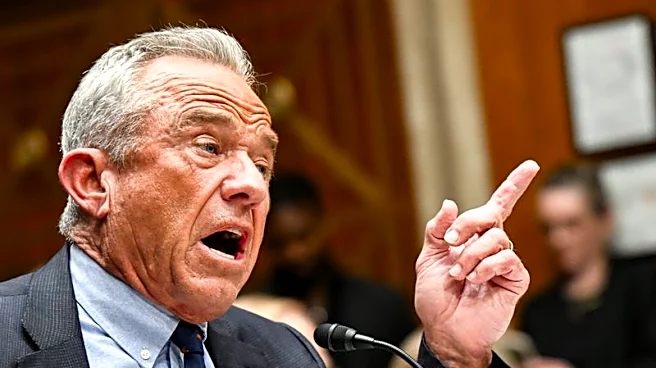
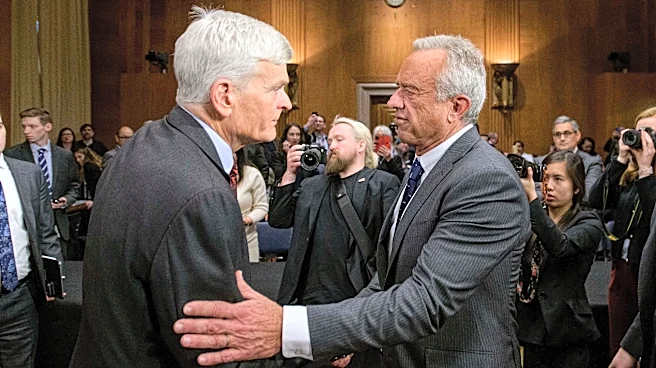
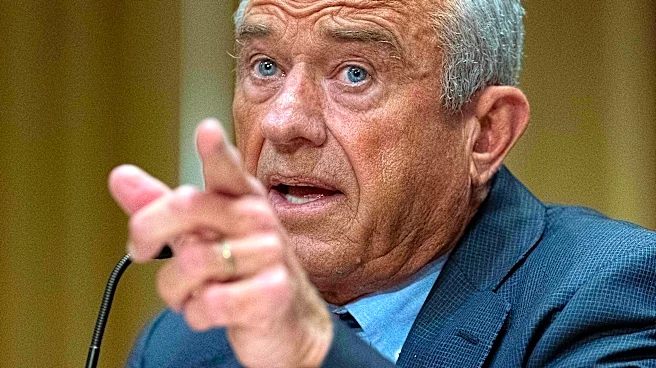
Health Secretary Robert F Kennedy Jr, known for his vaccine skepticism, has been attempting to reshape U.S. vaccine policy since taking office. His proposal to reduce the number of recommended vaccinations for children was recently blocked by a judge
in March. This development comes amid a significant measles outbreak in the United States, marking the worst in decades. Last year, over 2,000 cases were reported, resulting in three deaths, and the trend continues with more than 1,500 cases already recorded in 2026. A recent poll by Politico suggested that more Americans doubt vaccine safety than trust it, although Dr. David Higgins, a pediatrician and public health assistant professor, argues that this interpretation of the survey results is misleading.
Why It's Important?
The actions and policies of Health Secretary Robert F Kennedy Jr are significant as they directly impact public health and safety, particularly in the context of the ongoing measles outbreak. The judicial block on his proposal underscores the contentious nature of vaccine policy in the U.S., which remains a deeply ideological issue. The potential shift in public opinion towards vaccine skepticism, as suggested by the Politico poll, could have far-reaching implications for public health initiatives and vaccination rates. This situation highlights the challenges faced by health authorities in maintaining public trust and ensuring high vaccination coverage to prevent outbreaks of preventable diseases.
What's Next?
The ongoing measles outbreak and the judicial block on the proposed vaccine policy changes suggest that further legal and public health debates are likely. Health authorities may need to intensify efforts to promote vaccine safety and efficacy to counteract growing skepticism. Additionally, the government might explore alternative strategies to address public concerns and improve vaccination rates. The outcome of these efforts will be crucial in determining the trajectory of public health policy and the management of vaccine-preventable diseases in the U.S.