
What's Happening?
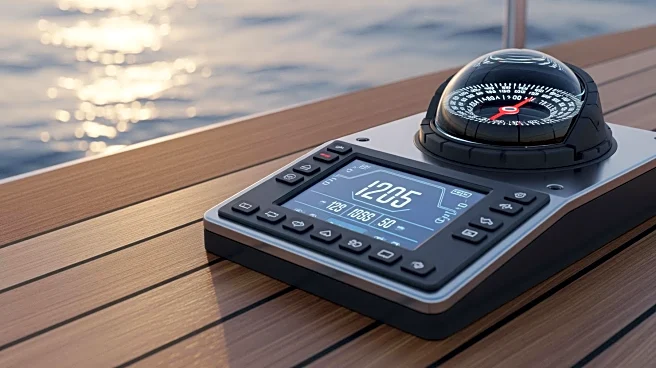
Researchers at Texas A&M University have developed a smart navigation system called SMART-SEA, designed to prevent collisions between ships and stationary structures like offshore platforms. By integrating
raw radar imaging data with advanced machine learning, SMART-SEA provides real-time guidance to seafarers on maneuvering their vessels. The system can detect stationary objects in all weather conditions and offers data delivery options visually, audibly, or both. The development involved collaboration with industry experts, the U.S. Navy, and the U.S. Coast Guard, ensuring practical decision-making capabilities. The system was tested aboard the Texas A&M research vessel Trident, showing promising results in reducing marine collisions.
Why It's Important?
The SMART-SEA system represents a significant advancement in maritime safety technology, potentially reducing the risk of collisions at sea. By providing real-time maneuvering guidance, the system enhances the decision-making capabilities of seafarers, which could lead to fewer accidents and improved safety for both commercial and recreational vessels. The integration of machine learning and radar data exemplifies the growing role of technology in enhancing operational safety in the maritime industry. Additionally, the system's potential low cost could make it accessible to a wide range of vessels, further promoting safety across the maritime sector.
What's Next?
The researchers at Texas A&M aim to secure additional funding to continue testing and improving the SMART-SEA system. Future developments may include adapting the system for use on a broader range of vessels, including recreational boats, to further reduce boating accidents. As the system gains traction, it could become a standard safety feature in the maritime industry. The success of SMART-SEA may also inspire further innovations in maritime technology, encouraging other institutions and companies to explore similar safety-enhancing solutions.