



What's Happening?
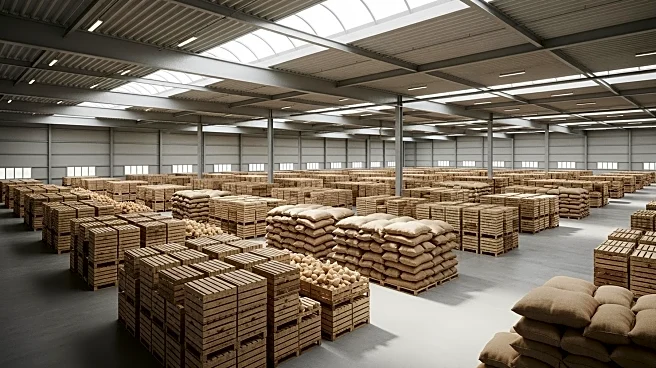
India's agricultural sector is experiencing a significant growth phase, with production outpacing domestic demand. This has highlighted the critical need for enhanced warehousing capabilities to manage surplus effectively. Current storage infrastructure
is insufficient, with a projected deficit of 69 million tonnes by 2030 if capacity does not increase. Robust warehousing is essential for food security, price stability, and export competitiveness. The sector is moving towards integrating technology to improve storage conditions and reduce losses, with public-private partnerships playing a key role in expanding infrastructure.
Why It's Important?
The development of India's agricultural warehousing is crucial for transforming production gains into economic value. Effective storage solutions can prevent post-harvest losses, stabilize prices, and support export growth. This is particularly important as India aims to enhance its global agricultural market presence. The warehousing sector's evolution will also impact rural finance, as stored commodities can serve as collateral for loans, providing financial stability to farmers and traders.
What's Next?
India is expected to continue investing in warehousing infrastructure, with a focus on technology integration and public-private partnerships. These efforts aim to bridge the capacity gap and improve storage quality. The government may also implement policy reforms to facilitate infrastructure development and attract investment. The success of these initiatives will be critical in ensuring that India's agricultural sector can sustain its growth and contribute to the broader economy.