






What's Happening?
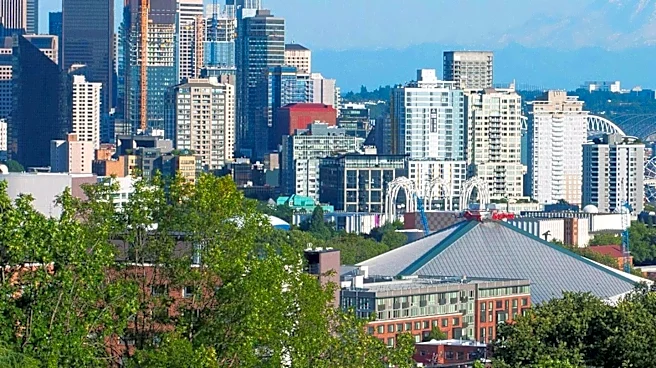
An astronaut aboard the International Space Station captured a striking image of Seattle, Washington, on June 16, 2026. Known as the 'Emerald City,' Seattle's lush parks and tree-filled neighborhoods are highlighted in the photograph, which also shows
the city's tall buildings and surrounding waterways. The city's landscape, shaped by glaciers during the last ice age, features drumlins and glacial erratics, remnants of the Puget lobe of the Cordilleran ice sheet. In recent history, human interventions have further altered the topography, including the leveling of Denny Hill and the creation of new land through tideflat filling. The image also showcases recent infrastructure developments, such as a new ferry dock and terminal, a rebuilt seawall, and a tunnel replacing an above-ground highway. These changes have enhanced public access to the waterfront, reflecting Seattle's ongoing urban evolution.
Why It's Important?
The photograph and accompanying details underscore the dynamic interplay between natural forces and human development in shaping urban landscapes. Seattle's transformation from a glacially sculpted terrain to a modern metropolis illustrates the impact of both geological history and urban planning. The city's infrastructure projects, aimed at improving waterfront access and transportation, highlight the importance of sustainable urban development in accommodating growing populations and economic activities. Additionally, the preservation of old-growth forests within city limits emphasizes the value of integrating natural habitats into urban environments, supporting biodiversity and enhancing residents' quality of life.
What's Next?
Seattle's ongoing development projects and environmental conservation efforts are likely to continue shaping the city's future. As urban areas expand, balancing infrastructure growth with ecological preservation will be crucial. Future initiatives may focus on enhancing public spaces, improving transportation networks, and addressing environmental challenges such as climate change and habitat loss. Stakeholders, including city planners, environmentalists, and residents, will play key roles in guiding Seattle's sustainable development trajectory.
Beyond the Headlines
The image of Seattle from space offers a unique perspective on the city's evolution, highlighting the broader implications of urban development in the context of climate change and environmental sustainability. The integration of natural landscapes within urban settings can serve as a model for other cities seeking to balance growth with ecological preservation. As cities worldwide face similar challenges, Seattle's approach to urban planning and environmental stewardship may provide valuable insights for sustainable development practices.