






What's Happening?
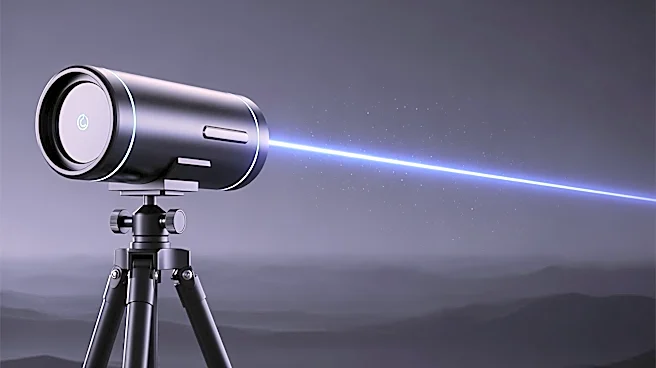
Russian company LazerBuzz has announced an increase in the range of its laser directed energy weapon (LDEW) to 1.5 kilometers. This development is part of Russia's Project Posokh and involves integration with an unnamed radar system. The LDEW has been
tested against unmanned aerial vehicles (UAVs) flying at speeds up to 140 km/h. The system is capable of detecting, targeting, and engaging UAVs through its internal control system. LazerBuzz is also collaborating with a Russian manufacturer to develop an acoustic sensor system, which will be used to modernize the laser countermeasure system for first-person view drones. The LDEW system includes a fiber-optic laser, with the temperature at the point of impact varying based on distance, weather conditions, and target material.
Why It's Important?
The enhancement of the LazerBuzz LDEW's range signifies a significant advancement in Russia's military capabilities, particularly in the realm of directed energy weapons. This technology could potentially alter the balance of power in military engagements, offering a new method for countering UAV threats. The integration of radar and acoustic sensor systems suggests a move towards more sophisticated and autonomous defense systems. This development may prompt other nations to accelerate their own directed energy weapon programs, potentially leading to an arms race in this technology sector. The implications for global security are considerable, as such advancements could change the dynamics of aerial warfare and defense strategies.