



What's Happening?
Scientists at the University of California, Irvine's School of Pharmacy & Pharmaceutical Sciences have identified a critical metabolic 'switch' in muscle stem cells that plays a pivotal role in muscle repair. This discovery, published in Nature Metabolism,
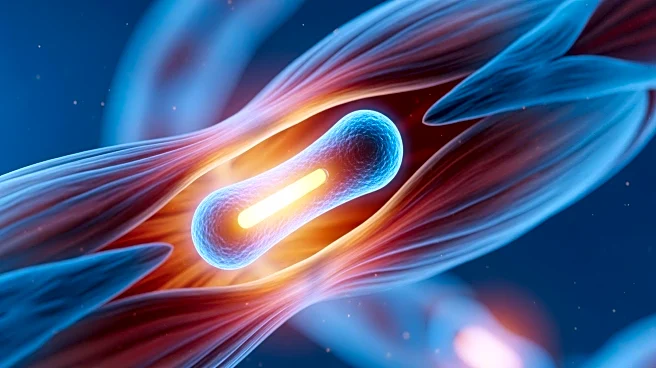
reveals that muscle recovery involves more than just protein intake or exercise; it is significantly influenced by the timing and utilization of cellular fuel. The research highlights that muscle stem cells initially suppress energy production post-injury by reducing the levels of the enzyme PFKM, redirecting glucose towards antioxidant production for repair. Once the repair phase is complete, energy metabolism resumes, facilitating muscle growth. This process can be accelerated by providing specific metabolic building blocks, offering a potential target for enhancing muscle regeneration, particularly in the context of aging and the use of GLP-1-based weight-loss medications.
Why It's Important?
The findings are significant as they address the growing concern of muscle loss associated with aging and the use of certain weight-loss medications. As the population ages and the use of GLP-1 therapies increases, maintaining muscle mass has become a critical health priority. The study's identification of a metabolic checkpoint offers a promising avenue for developing interventions to preserve and enhance muscle mass. This could have profound implications for improving the quality of life for older adults and individuals undergoing weight-loss treatments, potentially reducing the risk of frailty and associated health complications.
What's Next?
Future research may focus on developing therapeutic strategies that target the identified metabolic checkpoint to enhance muscle repair and growth. This could involve clinical trials to test the efficacy of supplying metabolic building blocks in accelerating muscle recovery in humans. Additionally, the findings may prompt further investigation into the broader applications of this metabolic switch in other conditions characterized by muscle loss. Collaboration with pharmaceutical companies could lead to the development of new treatments aimed at mitigating muscle decline in various patient populations.