






What's Happening?
New data from CPWR and the Bureau of Labor Statistics (BLS) indicate that safety improvements within the U.S. construction industry are inconsistent across different subsectors. While heavy and civil engineering has shown significant long-term improvement in nonfatal
injury rates, the building construction sector has experienced a recent increase in nonfatal injury rates and a long-term rise in fatal injury rates. In 2024, the private industry construction sector recorded 1,034 fatal work injuries, making it the highest count among all private-sector industries. Falls, slips, and trips were identified as the most common fatal events in building construction and for specialty trade contractors, whereas transportation incidents were more prevalent in heavy and civil engineering. This disparity highlights that a one-size-fits-all approach to safety is ineffective, and prevention strategies must be tailored to the specific hazards of each construction type. The data suggests a critical need for a renewed focus on fall prevention, particularly in building construction projects.
Why It's Important?
The uneven safety gains in the construction industry have significant implications for worker well-being, operational costs, and regulatory compliance across the U.S. The increase in fatal injury rates within building construction signals a critical risk to the workforce in this sector, potentially leading to higher insurance premiums, increased litigation, and reputational damage for companies. For contractors in regions like Colorado and Wyoming, understanding these subsector-specific trends is crucial for allocating resources effectively and implementing targeted safety measures. The data underscores that fall prevention is not a solved issue but an ongoing management challenge that requires continuous reassessment and adaptation. Failure to address these disparities can result in continued loss of life, severe injuries, and a less productive workforce, impacting the overall economic stability and growth of the construction industry.
What's Next?
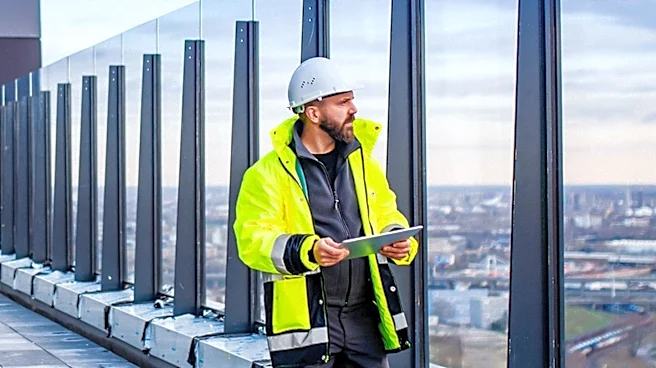
In response to these findings, construction leaders, particularly those in building construction and specialty trades, are urged to reassess their fall prevention strategies. This includes conducting phase-by-phase hazard reviews for elevated work, verifying that chosen controls match actual exposures, and daily reviews of ladder, scaffold, and aerial-lift practices. For heavy and civil engineering, while transportation risks are primary, fall exposures on structures and equipment access points should not be overlooked. Specialty trade contractors need to clarify responsibilities for fall protection on multi-employer sites before mobilization. The industry is expected to see a push for more tailored safety playbooks that reflect the specific work being performed rather than relying on broad industry averages. This will likely involve enhanced training, supervisor coaching, and the use of leading indicators like near misses to proactively address safety gaps and improve field execution.
Beyond the Headlines
The persistent disparity in construction safety gains points to deeper systemic issues beyond mere compliance. It highlights the ethical imperative for construction companies to prioritize worker safety through proactive and adaptive measures. The data suggests that while overall safety awareness may have improved, the practical application of safety protocols varies significantly based on project type and site conditions. This could lead to a cultural divide where certain subsectors perceive safety as less critical or more challenging to implement. Long-term, this uneven progress could influence regulatory frameworks, potentially leading to more stringent, subsector-specific safety standards and increased scrutiny from OSHA. Furthermore, clients and upstream contractors are increasingly evaluating safety performance as a key factor in contractor selection, transforming disciplined fall prevention from a compliance issue into a competitive advantage and a core component of project execution and labor continuity.