


What's Happening?
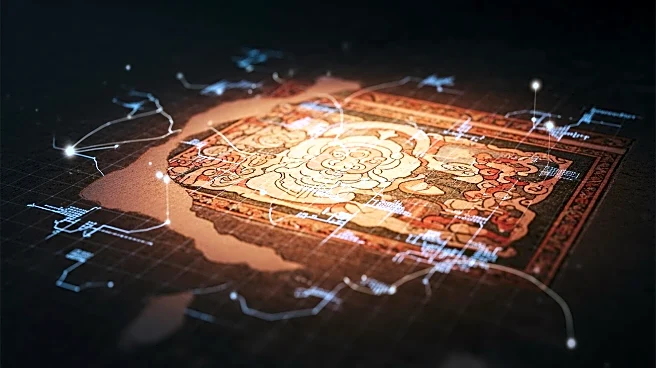
A recent study has applied deep learning optimization algorithms (DLOA) to restore the Yongle Palace murals, a significant cultural heritage site. The research utilized a combination of adaptive moment estimation and deep learning methods to improve image
restoration accuracy. The study involved both qualitative and quantitative evaluations, using metrics such as mean absolute error (MAE), peak signal-to-noise ratio (PSR), and Pearson correlation coefficient (PCC) to assess the restoration quality. The DLOA method demonstrated superior performance compared to other algorithms, effectively restoring the murals' textures and structural details. The research also highlighted the method's ability to maintain artistic authenticity while enhancing the murals' visual quality.
Why It's Important?
The application of advanced deep learning techniques in cultural heritage restoration represents a significant advancement in preserving historical artifacts. The Yongle Palace murals, with their intricate designs and historical value, benefit from this technology by ensuring their longevity and accessibility. This method not only aids in the physical preservation of the murals but also provides digital reference samples for experts, potentially reducing restoration costs and risks. Furthermore, the digital restoration can be integrated into museum exhibitions, enhancing public access and educational opportunities. The study underscores the potential of technology to bridge the gap between cultural preservation and modern digital solutions.
What's Next?
The successful application of DLOA in mural restoration could lead to broader adoption in other cultural heritage projects. Future research may focus on refining these algorithms to handle different types of artifacts and degradation scenarios. Additionally, collaborations between technologists and cultural heritage experts could further enhance the effectiveness of digital restoration techniques. The integration of these methods into museum displays and educational programs is likely to continue, promoting wider public engagement with cultural heritage.
Beyond the Headlines
The use of deep learning in cultural heritage restoration raises questions about the balance between technological intervention and traditional restoration methods. While digital techniques offer precision and efficiency, they also challenge the authenticity and originality of restored artifacts. Ethical considerations regarding the extent of digital manipulation and its impact on cultural narratives are crucial. As technology becomes more integrated into heritage preservation, ongoing dialogue between stakeholders will be essential to navigate these complex issues.