



What's Happening?
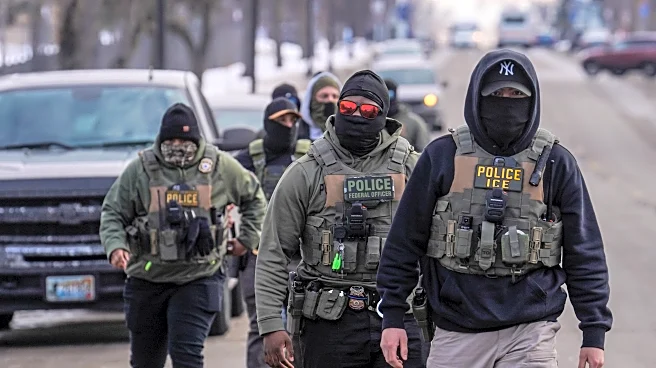
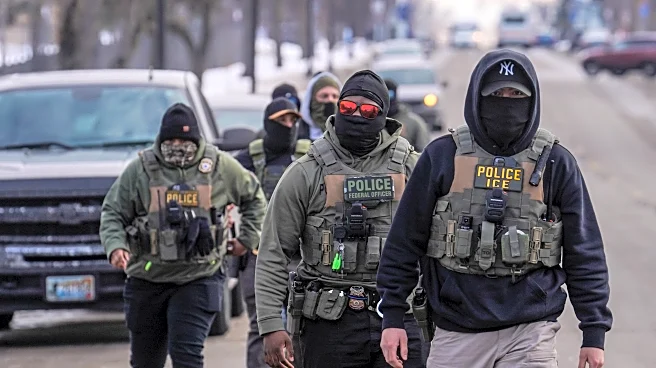
The Trump administration is urging a federal judge to dismiss a lawsuit filed by Minnesota and its largest cities, which seeks to halt an immigration enforcement operation known as Operation Metro Surge. This operation has led to the arrest of over 3,000
individuals in the Minneapolis and St. Paul areas. The Justice Department argues that the lawsuit is 'legally frivolous' and asserts that the Department of Homeland Security is acting within its legal authority to enforce immigration laws. Minnesota Attorney General Keith Ellison contends that the operation violates constitutional rights, including free speech, and describes the enforcement actions as an 'invasion' by poorly trained armed officers. The lawsuit, filed on January 12, aims to stop or limit the enforcement actions, but a decision from U.S. District Judge Katherine Menendez is still pending.
Why It's Important?
This legal battle highlights the ongoing tension between federal and state authorities over immigration enforcement. The outcome of this case could set a precedent for how much control states have over federal immigration operations within their borders. If the court sides with Minnesota, it could empower other states to challenge federal immigration policies they deem overreaching. Conversely, a ruling in favor of the Trump administration could reinforce federal authority in immigration matters, potentially leading to more aggressive enforcement actions nationwide. The case also underscores the broader national debate over immigration policy and the balance of power between state and federal governments.
What's Next?
The court's decision on this lawsuit will be closely watched, as it could influence future interactions between state and federal authorities regarding immigration enforcement. If the judge rules in favor of Minnesota, it may prompt other states to file similar lawsuits, challenging federal immigration operations. On the other hand, a ruling in favor of the Trump administration could lead to an escalation of enforcement activities in states perceived as less cooperative with federal immigration policies. Additionally, the public response to the court's decision could impact political discourse and policy-making on immigration at both state and national levels.
Beyond the Headlines
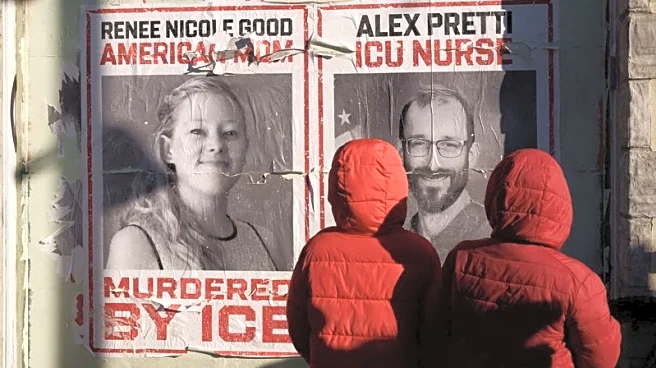
The case raises important questions about the rights of individuals during immigration enforcement operations, particularly concerning the treatment of U.S. citizens and the use of force by federal officers. The incident involving the fatal shooting of Renee Good by an immigration officer has intensified scrutiny of the operation, with civil rights advocates expressing concern over potential abuses of power. The legal and ethical implications of such enforcement actions could lead to calls for reform in how immigration laws are enforced, potentially influencing future policy decisions and legislative actions.