




What's Happening?
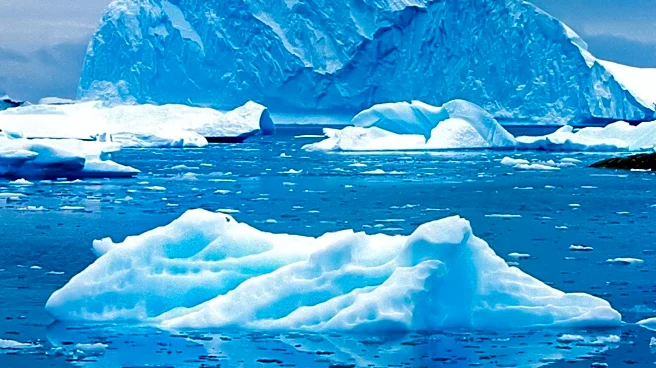
A recent study led by environmental scientist Chengzhen Zhou from Peking University reveals that melting ice in Antarctica is releasing significant amounts of mercury into the ocean. This phenomenon is attributed to the 'atmosphere-glacier-land-ocean
loop,' which re-mobilizes mercury previously trapped in ice. The study, published in the Proceedings of the National Academy of Sciences, indicates that mercury accumulation on the Antarctic Peninsula has increased by 160% since the mid-1800s. The mercury contamination poses a risk to the Southern Ocean food chain, affecting species such as Antarctic toothfish and sharks, and could potentially spread further through ocean currents.
Why It's Important?
The release of mercury from melting Antarctic ice has serious implications for marine ecosystems and global food safety. Mercury is a potent neurotoxin that can accumulate in marine life, posing health risks to both wildlife and humans who consume seafood. The study highlights the interconnectedness of climate change and pollution, as industrial activities contribute to both greenhouse gas emissions and mercury release. Addressing these issues requires coordinated global efforts to reduce fossil fuel consumption and implement effective environmental policies. The findings underscore the urgency of mitigating climate change to protect vulnerable ecosystems and ensure food security.
What's Next?
The study's findings may prompt increased scientific research and monitoring of mercury levels in Antarctic waters and beyond. Policymakers and environmental organizations could advocate for stricter regulations on mercury emissions and enhanced efforts to combat climate change. International cooperation will be essential to address the transboundary nature of mercury pollution and its impact on global marine ecosystems. Public awareness campaigns may also play a role in encouraging sustainable practices and reducing reliance on fossil fuels. The research could influence future environmental policies and conservation strategies aimed at preserving the health of the planet's oceans.