








What's Happening?
DP World, a government-controlled ports and logistics company, has announced plans to expand the Fujairah Port in the United Arab Emirates. This development aims to bypass the Strait of Hormuz, a strategic chokepoint in global oil transportation. The
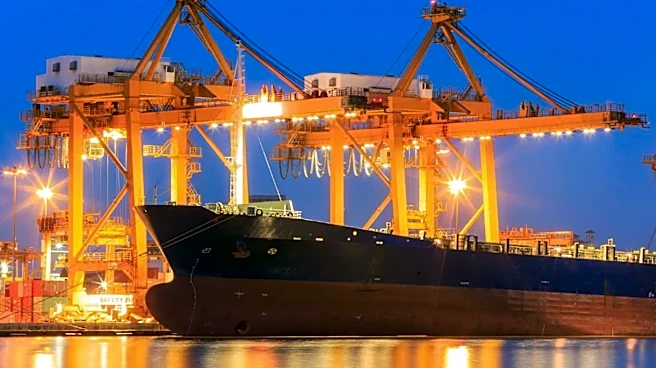
expansion will include the construction of new terminals at Fujairah on the Gulf of Oman, with the first phase expected to be completed in two years. The project is part of a 50-year concession agreement with the Fujairah Ports Authority. The new Al Rugaylat terminal will handle containers, while the Dubba General Cargo terminal will manage multi-purpose cargo. This initiative is designed to increase the UAE's role in regional shipping and provide an alternative route for oil and cargo, reducing dependency on the Strait of Hormuz.
Why It's Important?
The expansion of Fujairah Port is significant as it addresses the geopolitical risks associated with the Strait of Hormuz, through which a significant portion of the world's oil supply passes. By creating an alternative route, the UAE aims to secure its oil exports and enhance its position as a key player in global shipping. This move could stabilize oil prices by reducing the risk of supply disruptions. Additionally, the project will increase the UAE's container handling capacity, boosting its logistics and trade capabilities. The development is expected to attract more maritime traffic to the region, potentially leading to economic growth and increased employment opportunities.
What's Next?
Construction of the new terminals is set to begin soon, with completion expected within 24 to 30 months. Once operational, the expanded port will significantly increase DP World's container handling capacity in the UAE. The project will also enhance connectivity between Fujairah and Jebel Ali, the UAE's primary port, through DP World's inland logistics network. This will enable more efficient cargo movement between ports and logistics hubs. The expansion is likely to attract interest from global shipping companies and could lead to further investments in the region's maritime infrastructure.