
What's Happening?
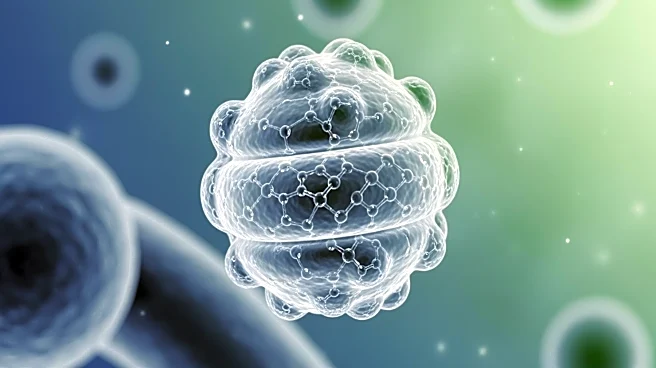
Researchers at Harvard's Wyss Institute and the John A. Paulson School of Engineering and Applied Sciences have developed a new platform called 'implantable living materials' (ILMs). These materials encapsulate
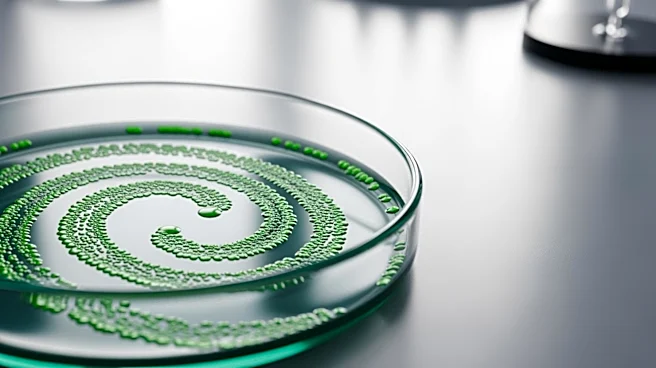
genetically engineered bacteria that can sense infections and release therapeutic molecules on demand. The bacteria are contained within a hydrogel designed to withstand mechanical stresses and regulate bacterial growth, allowing them to remain effective for over six months. The ILMs have been engineered to detect chemical signals from the pathogen Pseudomonas aeruginosa, a common cause of implant-related infections. Upon detection, the bacteria self-destruct to release an antibacterial protein that kills the pathogen. This system has shown success in reducing bacterial burden in a mouse model of joint infection, indicating its potential for long-term disease treatment.
Why It's Important?
The development of ILMs represents a significant advancement in the field of microbial medicine. By providing a method to safely contain and control the release of therapeutic bacteria, this technology could revolutionize the treatment of infections and other diseases. The ability to deliver drugs directly to the site of infection or injury, and in response to specific biological signals, offers a more targeted and efficient approach compared to traditional drug delivery methods. This could lead to improved patient outcomes, reduced side effects, and a decrease in the development of antibiotic resistance. The ILM strategy also opens up possibilities for treating a wider range of diseases, potentially surpassing the efficacy of existing drug delivery systems.
What's Next?
The researchers suggest that ILMs could be used in various medical applications, from tissue regeneration to immune modulation. A patent application for the use of ILMs in drug delivery has been filed, indicating potential commercial development. Further research is needed to explore the long-term functionality of these living therapeutics in vivo and to address any remaining safety concerns. The success of this technology in clinical settings could pave the way for new treatments that are more effective and safer than current options.
Beyond the Headlines
The use of ILMs highlights the growing trend towards personalized and precision medicine. By tailoring treatments to the specific needs of individual patients and their unique biological environments, healthcare providers can offer more effective and efficient care. This approach also raises ethical and regulatory questions about the use of genetically engineered organisms in medicine, which will need to be addressed as the technology advances. The potential for ILMs to transform the landscape of drug delivery and disease treatment is significant, but it will require careful consideration of the broader implications for society and the healthcare system.