







What's Happening?
Israel's security cabinet is set to convene to discuss the potential resumption of conflict in Gaza. This follows Hamas's response to a disarmament plan proposed by the Board of Peace, which was initially rejected in April. The response from Hamas includes
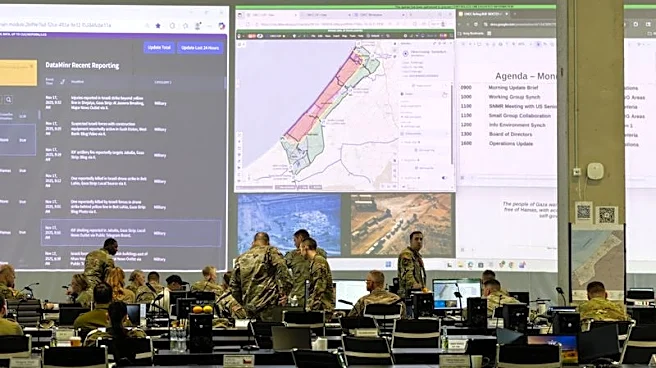
demands for a complete ceasefire and the withdrawal of Israeli Defense Forces from Gaza. The Gaza Board of Peace has denied rumors about closing its Civil-Military Coordination Center in Kiryat Gat, emphasizing its ongoing role in delivering aid and maintaining security. The situation remains tense as both sides navigate the terms of the proposed disarmament and ceasefire.
Why It's Important?
The discussions in Israel's security cabinet are crucial as they could lead to renewed conflict in Gaza, affecting regional stability. The outcome of these talks may influence international diplomatic efforts and humanitarian aid operations in the region. The potential for resumed fighting poses risks to civilian safety and could disrupt ongoing peace initiatives. The situation also highlights the challenges in achieving a lasting peace agreement between Israel and Hamas, with implications for broader Middle Eastern geopolitics.
What's Next?
The security cabinet's decision could lead to either a de-escalation or an escalation of tensions in Gaza. If the cabinet opts for military action, it may prompt international responses and calls for restraint. Conversely, a decision to pursue diplomatic solutions could open pathways for further negotiations. The international community, including the United States and other stakeholders, will likely monitor the situation closely, potentially influencing their foreign policy and aid strategies in the region.