




What's Happening?
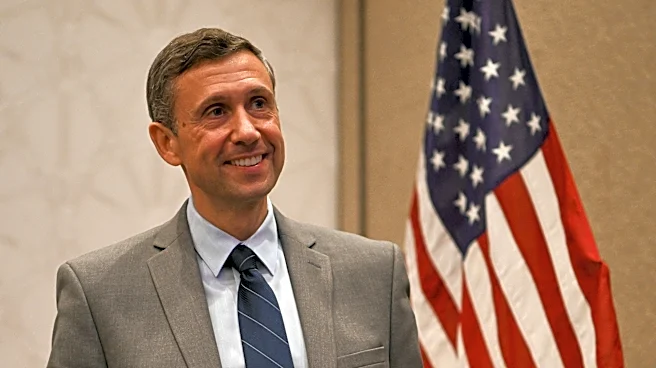
Kentucky Governor Andy Beshear is considering a potential presidential campaign in 2028, as he indicated during an interview on CBS's 'Face the Nation'. While he has not made a final decision, Beshear stated his current focus is on assisting Democrats
in gubernatorial races nationwide. He emphasized his commitment to addressing national division and the perception that the American dream is no longer attainable. Beshear proposed significant changes to federal government operations, including congressional and Supreme Court term limits, an end to partisan redistricting, and replacing the Electoral College with a direct popular vote for president and vice president. He believes these reforms could improve governmental functionality and restore public faith. Additionally, Beshear criticized rising healthcare and housing costs, advocating for Democrats to prioritize delivering tangible results for American citizens.
Why It's Important?
Governor Beshear's exploration of a 2028 presidential bid and his proposed government reforms carry significant implications for the U.S. political landscape. His suggestions for term limits, ending partisan redistricting, and abolishing the Electoral College represent fundamental shifts in how the federal government operates and how national elections are conducted. If implemented, these changes could profoundly alter the balance of power, potentially leading to a more representative democracy or, conversely, unintended consequences for political stability. His focus on addressing national division and economic concerns like healthcare and housing costs resonates with a broad segment of the American populace, indicating a potential platform that could challenge existing political narratives. The discussion of such reforms by a prominent Democratic governor signals a growing appetite within parts of the party for structural changes to the U.S. political system, which could influence future policy debates and electoral strategies.
What's Next?
Governor Beshear's immediate focus remains on his role as chairman of the Democratic Governors Association until December, where he will work to support Democratic gubernatorial candidates across the country. His decision regarding a 2028 presidential run is expected after this period. In the interim, his proposed reforms are likely to spark further debate within political circles and among the public. As the 2028 election cycle approaches, his potential candidacy will be closely watched, and his policy positions, particularly on government reform, will likely be scrutinized by both potential allies and opponents. The discussion around term limits, redistricting, and the Electoral College could gain traction, potentially influencing legislative agendas or becoming key issues in future political campaigns. His emphasis on delivering results for Americans on issues like healthcare and housing will also be a critical aspect of his political messaging moving forward.
Beyond the Headlines
Beyond the immediate political implications, Governor Beshear's call for fundamental government reforms touches upon deeper questions about the efficacy and fairness of the U.S. democratic system. Proposals like congressional and Supreme Court term limits challenge long-standing traditions of political tenure and judicial independence, raising ethical and constitutional considerations about experience versus fresh perspectives. Ending partisan redistricting aims to address concerns about gerrymandering and its impact on voter representation, potentially leading to more competitive elections and a more accurate reflection of public will. Replacing the Electoral College with a direct popular vote for president and vice president would fundamentally alter the nature of presidential campaigns and the distribution of political power among states, sparking debates about federalism and the voice of smaller states. These discussions highlight a broader societal yearning for a government perceived as more responsive and less polarized, reflecting a desire to restore faith in democratic institutions and the American dream.