
What's Happening?
The Colombian government has initiated a significant move to transition its economy and that of other nations away from fossil fuels. This development was marked by the first-ever conference on transitioning
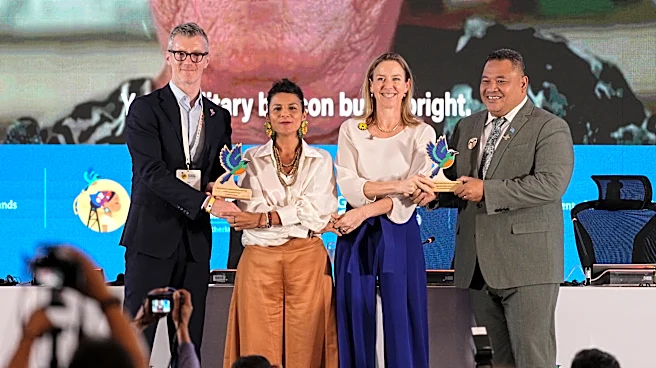
away from fossil fuels, held in Santa Marta, Colombia. The conference brought together nearly 60 countries committed to reducing their reliance on coal, gas, and oil. Irene Vélez Torres, Colombia's environment minister, emphasized the importance of this initiative as a step towards a new global climate democracy. The conference comes at a time when global oil and gas prices have surged due to geopolitical tensions, highlighting the vulnerability of economies dependent on fossil fuels. The event also underscored the potential of renewable energy as a viable alternative, with experts predicting a permanent shift in the global energy landscape.
Why It's Important?
This initiative is crucial as it represents a concerted effort by multiple nations to address the global climate crisis by reducing dependency on fossil fuels. The transition to renewable energy is expected to enhance energy security, stabilize economies, and reduce geopolitical risks associated with fossil fuel dependency. The move is particularly significant for developing nations, which are disproportionately affected by the volatility of fossil fuel markets. By fostering a shift towards renewables, countries can achieve greater economic stability and environmental sustainability. The conference also highlights the growing divide between nations embracing renewable energy and those continuing to rely on fossil fuels, potentially reshaping global economic and political dynamics.
What's Next?
Countries participating in the Santa Marta conference are expected to develop national roadmaps for phasing out fossil fuels. These plans will be integrated into broader UN climate negotiations, encouraging more nations to join the transition movement. The next conference is scheduled to take place in Tuvalu, co-hosted with Ireland, where further progress on these roadmaps will be discussed. However, challenges remain, as some countries continue to expand fossil fuel production. The success of this initiative will depend on the ability of participating nations to implement their commitments and overcome political and economic obstacles.
Beyond the Headlines
The Santa Marta conference represents a shift towards a more inclusive and democratic approach to climate action, emphasizing the role of civil society and scientific input. This approach contrasts with traditional international meetings often dominated by corporate interests and petrostate influences. The initiative also highlights the ethical imperative of ensuring a just transition that considers the needs of workers and vulnerable communities affected by the shift away from fossil fuels. The conference's focus on justice and equity underscores the importance of addressing social and economic disparities in the global energy transition.