


What's Happening?
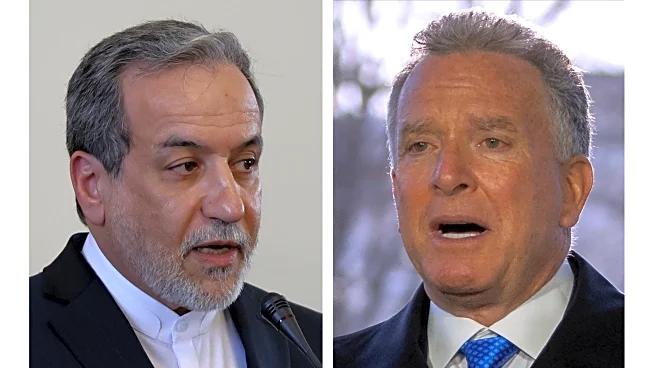
The Trump administration has communicated to Iran that it expects the Iranian delegation, led by Foreign Minister Abbas Araghchi, to present 'meaningful substance' at the next round of nuclear talks. This demand comes as Iran remains firm on continuing
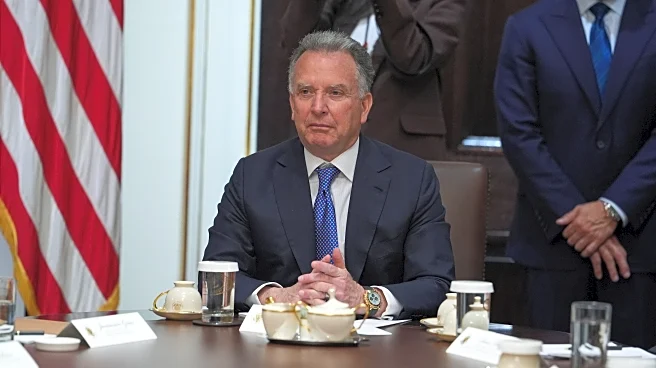
its uranium enrichment, which it insists is for peaceful purposes. The recent meeting in Oman between U.S. special envoy Steve Witkoff, Jared Kushner, and Iranian officials was described as productive, focusing on the negotiation process rather than substantive issues. However, Iran has ruled out discussions on its missile program and regional activities, maintaining that the talks should solely address nuclear issues.
Why It's Important?
The outcome of these negotiations holds significant implications for international security and U.S. foreign policy. The U.S. aims to prevent Iran from acquiring nuclear weapons, which is a critical concern for regional stability, particularly for allies like Israel. The insistence on concessions reflects the U.S.'s strategic approach to curbing Iran's nuclear ambitions and its influence in the Middle East. Failure to reach an agreement could escalate tensions, potentially leading to increased sanctions or military confrontations, affecting global oil markets and international relations.
What's Next?
The next steps involve further negotiations where the U.S. expects Iran to offer concessions. The meeting between President Trump and Israeli Prime Minister Benjamin Netanyahu is also anticipated to influence the U.S. stance, as Israel advocates for stringent measures against Iran. The international community will be closely monitoring these developments, as any agreement or lack thereof could reshape geopolitical dynamics in the Middle East.
Beyond the Headlines
The negotiations underscore the broader geopolitical struggle between the U.S. and Iran, with implications for global non-proliferation efforts. The talks also highlight the challenges of diplomatic engagement with regimes that have complex regional and military ambitions. The U.S.'s approach may set precedents for future diplomatic strategies with other nations pursuing nuclear capabilities.