



What's Happening?
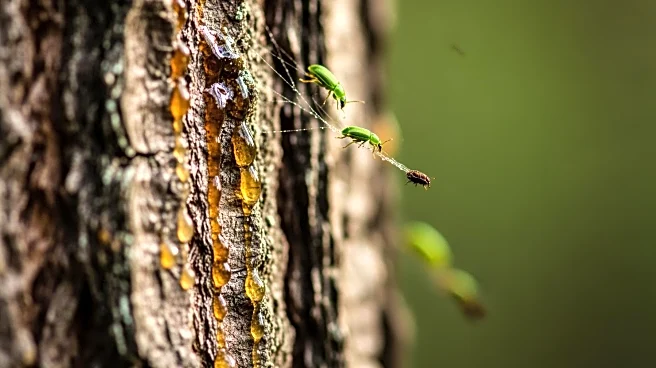
Researchers at the Max Planck Institute for Chemical Ecology have uncovered a complex chemical interaction between spruce trees, bark beetles, and fungi. The study reveals that spruce trees produce phenolic compounds as a defense against fungi. Bark beetles consume
these compounds and convert them into more toxic derivatives to protect themselves from fungal infections. However, the fungus Beauveria bassiana has developed a detoxification mechanism, allowing it to infect the beetles. This discovery highlights the intricate chemical warfare within forest ecosystems and the evolutionary adaptations of these organisms.
Why It's Important?
Understanding the chemical interactions between trees, insects, and fungi is crucial for developing effective biological control methods for pests like bark beetles, which pose significant threats to forestry. The study's findings could lead to improved pest management strategies, reducing the economic impact of beetle infestations. Additionally, this research contributes to the broader understanding of ecological interactions and evolutionary biology, offering insights into how organisms adapt to environmental pressures. The ability of fungi to detoxify beetle defenses also opens new avenues for exploring natural pest control solutions.
What's Next?
Future research will focus on the prevalence of the detoxification pathway in different fungal strains and its interaction with other pathogen traits. This could lead to the development of targeted biological control methods using fungi that can withstand beetle defenses. Understanding these mechanisms may also inform the creation of more sustainable pest management practices, reducing reliance on chemical pesticides and promoting ecological balance in forest ecosystems.