







What's Happening?
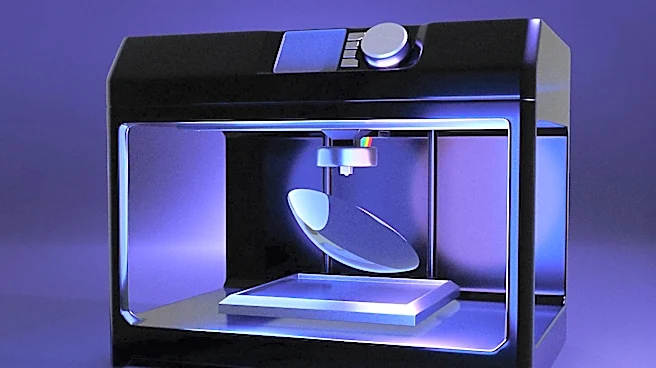
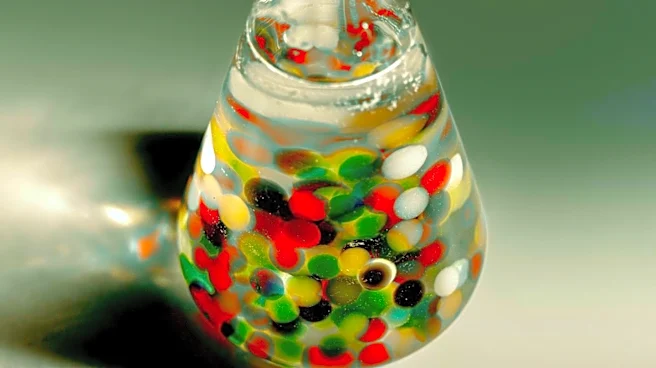
Recent developments in bioengineering have introduced hybrid living models that integrate both the bath and bioink as active components. These models are particularly promising for creating perfusable tubes with stiffness gradients and spatial heterogeneity
of cell types, which are crucial for reconstructing vascularized tissue microenvironments. This approach allows for the exploration of interactions between arteries and their surrounding tissue environment, providing insights into various vascular diseases. The models are designed to mimic the structural and functional aspects of human vessels, enabling researchers to study the etiology of vascular diseases more effectively. The focus is on developing disease-aligned toolchains, including standardized bioinks and validated perfusion protocols, to deliver actionable physiological insights.
Why It's Important?
The advancement of hybrid living models in bioengineering is significant as it offers a more accurate representation of human vascular systems, which is essential for understanding and treating vascular diseases. These models can potentially transform how researchers study diseases by providing a more realistic environment to test therapeutic interventions. This could lead to more effective treatments and a better understanding of disease mechanisms, ultimately benefiting patients with vascular conditions. The ability to recreate complex tissue environments also opens new avenues for drug testing and personalized medicine, potentially reducing the time and cost associated with bringing new treatments to market.
What's Next?
The next steps in this field involve refining the hybrid living models to enhance their accuracy and applicability in various research settings. Researchers are expected to focus on developing standardized protocols and bioinks that can be widely adopted. This will likely involve collaboration between academic institutions, biotech companies, and regulatory bodies to ensure that these models meet the necessary standards for research and clinical applications. As these models become more sophisticated, they may also be used to study other complex diseases, expanding their impact beyond vascular research.
Beyond the Headlines
The development of hybrid living models raises important ethical and regulatory considerations. As these models become more integrated into research, there will be a need to establish guidelines for their use, particularly in terms of ensuring that they are used ethically and that the data generated is reliable. Additionally, the long-term implications of using such models in drug development and personalized medicine will need to be carefully considered, particularly in terms of patient safety and the potential for unforeseen side effects.