








What's Happening?
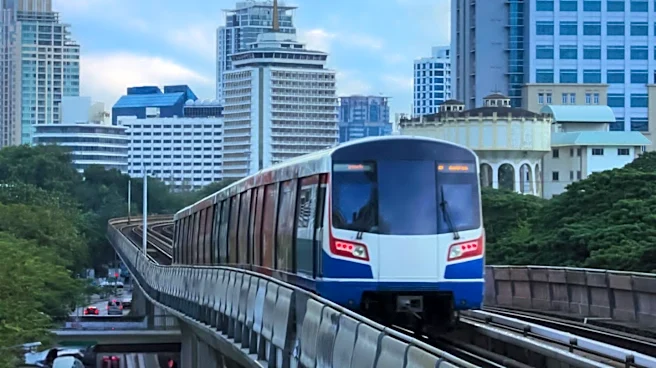
The cabinet has approved a proposal from the Transport Ministry to cap electric train fares in Greater Bangkok at a maximum of 45 baht per trip for Thai nationals. This policy, effective for the 2027 calendar year, aims to ease the cost of living for commuters.
Deputy government spokeswoman Ploythalay Laksameesaengjan announced the decision, which was made during a mobile cabinet meeting in Udon Thani province. Under the new fare structure, ticket prices will start at 17 baht and be capped at 45 baht across all mass transit lines in Greater Bangkok. Passengers will initially pay the full price for their trips, with the discounted difference to be reimbursed later through the government's 'Pao Tang' mobile application. The cabinet has allocated approximately 5.8 billion baht to subsidize this flat-fare scheme, along with an additional 22 million baht to cover transaction costs associated with passenger refunds.
Why It's Important?
This fare cap is a significant measure designed to directly address the financial burden on regular Thai commuters, making public transportation more affordable and accessible. By reducing daily travel costs, the policy could free up disposable income for households, potentially stimulating local consumption and supporting the economy. It also encourages the use of public mass transit, which can help alleviate severe traffic congestion in Greater Bangkok and contribute to a reduction in carbon emissions. The implementation of a reimbursement system via a mobile application highlights the government's use of digital platforms for public welfare initiatives. This policy underscores a commitment to social welfare and urban sustainability, aiming to improve the quality of life for a large segment of the population while promoting more environmentally friendly commuting habits.
What's Next?
The 45-baht fare cap will be implemented for the 2027 calendar year. The Transport Ministry and relevant agencies will need to finalize the operational details for the reimbursement process through the 'Pao Tang' mobile application. This includes ensuring the application's functionality, establishing clear guidelines for commuters to claim their reimbursements, and conducting public awareness campaigns to inform eligible Thai nationals about the new policy and how to utilize it. The allocated 5.8 billion baht for subsidies and 22 million baht for transaction costs will be managed to ensure the smooth functioning of the scheme. Monitoring the impact of the fare cap on ridership, traffic patterns, and commuter spending will be crucial for evaluating its effectiveness and informing future public transport policies.
Beyond the Headlines
While the fare cap is intended to benefit Thai nationals, its exclusion of non-Thai residents and visitors could lead to discussions about equitable access to public services. This distinction might create a perception of differential treatment within the public transport system. Furthermore, the reliance on a mobile application for reimbursement, while technologically advanced, could pose challenges for individuals who are less tech-savvy or lack access to smartphones, potentially limiting the reach of the benefit. The long-term sustainability of such a subsidized fare structure will also be a key consideration, especially regarding its impact on the financial health of mass transit operators and the national budget. This policy could set a precedent for future government interventions in public utility pricing, reflecting a broader trend towards using subsidies to manage living costs and promote specific social or environmental objectives.