




What's Happening?
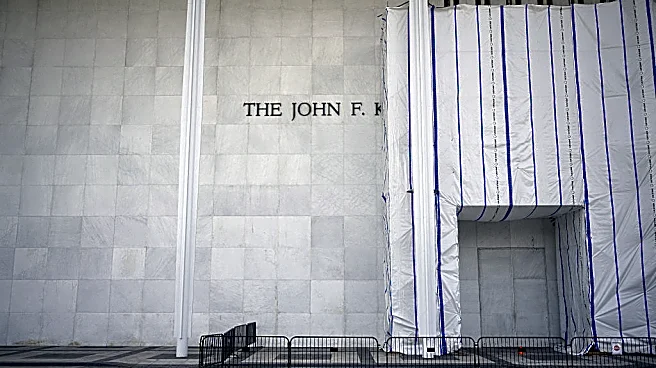
Representative Joyce Beatty (D-Ohio) has filed an emergency motion to prevent President Trump's name from being prominently displayed at the John F. Kennedy Center for the Performing Arts. This action follows the Kennedy Center Board of Trustees' revised
plan to incorporate President Trump's name in several ways, despite a previous federal court ruling. The board informed the federal district court in Washington, D.C., that they intend to honor President Trump's contributions to the center's reconstruction by calling the facility 'The John F. Kennedy Memorial Center for the Performing Arts, renovated and restored by President Donald J. Trump.' Furthermore, once the Trump Kennedy Center Fund reaches a $100 million endowment, the name would expand to 'The John F. Kennedy Memorial Center for the Performing Arts, renovated and restored by President Donald J. Trump, endowed by The Trump Kennedy Center Fund.' The board also plans to name the currently unnamed grounds surrounding the facility the 'President Donald J. Trump Plaza.' Representative Beatty, an ex officio member of the board, argues that these actions violate the Kennedy Center statute, which dictates the center is to be named solely for President Kennedy.
Why It's Important?
This legal challenge highlights an ongoing dispute regarding the naming conventions and historical preservation of a significant national cultural institution. The Kennedy Center, established to honor President John F. Kennedy, holds symbolic importance as a living memorial to his legacy. The attempt to add President Trump's name, even in a modified capacity, raises questions about the integrity of such memorials and the potential for political influence to alter their original intent. The outcome of this motion could set a precedent for how national monuments and cultural centers are named and whether contributions from subsequent administrations can lead to co-naming or significant alterations. It also underscores the tension between recognizing financial contributions and maintaining the historical and symbolic purity of a dedicated memorial. This situation could influence future decisions regarding public-private partnerships in cultural institutions and the extent to which donors or political figures can dictate naming rights.
What's Next?
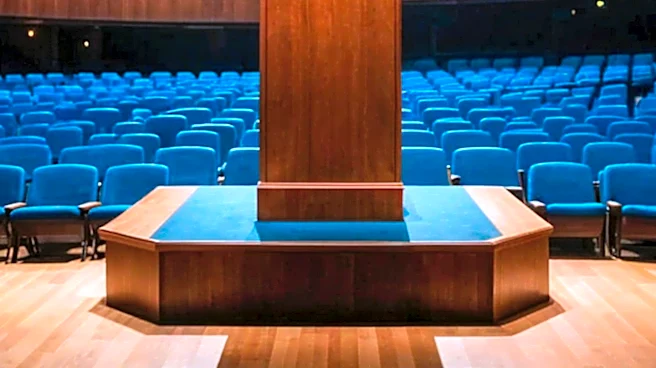
The parties involved are awaiting court action on Representative Beatty's emergency order. Her motion requests a temporary stay and a permanent injunction on the Kennedy Center's plans to rename the facility and its grounds. The legal status of these plans remains uncertain as the center prepares for its fall season. Concurrently, the Kennedy Center board recently voted to close the facility for two years for a major structural construction project. This decision was made after incorporating a presentation from an independent analyst, addressing previous concerns raised by U.S. District Judge Christopher Cooper regarding the prudence of their initial closure vote. The court's decision on Beatty's motion will determine whether the proposed naming changes can proceed and could potentially impact the broader renovation plans if the legal battle prolongs or expands.
Beyond the Headlines
The controversy surrounding the Kennedy Center's naming reflects a broader societal debate about how historical figures are honored and how public spaces are designated in a politically charged environment. The legal arguments center on the interpretation of the Kennedy Center statute, specifically whether 'renovated and restored by President Donald J. Trump' constitutes a 'formal name or public memorial' that violates the original intent to honor President Kennedy exclusively. This case could delve into the legal definitions of 'naming' versus 'acknowledgment' in the context of national memorials. Beyond the legal specifics, the dispute touches upon the cultural memory of the nation and the appropriate ways to recognize presidential contributions without overshadowing the primary honoree. It also highlights the role of congressional oversight, as Representative Beatty, an ex officio board member, is actively challenging the board's decisions in court, emphasizing the checks and balances within the governance of national institutions.