




What's Happening?
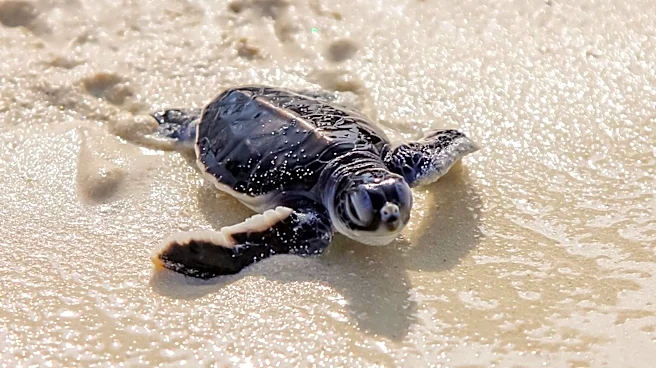
On September 16, an olive ridley sea turtle laid a nest on Surfside Beach, located next to Sunset Beach in Seal Beach, marking the first confirmed sea turtle nest ever documented on the entire U.S. West Coast. This event is significant as these turtles
typically nest hundreds of miles south in Mexico. A second nest was later found near the Huntington Beach Pier. Due to threats from Hurricane Polo and high tides, biologists carefully relocated over 100 eggs from the Surfside/Seal Beach nest to the Aquarium of the Pacific to prevent them from being washed away. Friedman Adventures live-streamed the extraction of these eggs. Recently, the first batch of hatchlings was released back into the ocean by Seal Beach Marine Safety and partner organizations including NOAA and U.S. Fish & Wildlife. Officials are continuing to monitor the remaining eggs.
Why It's Important?
The discovery of an olive ridley sea turtle nest on the U.S. West Coast is a rare and significant ecological event. Olive ridley sea turtles are a protected species, and their nesting patterns are typically confined to more southern waters. This occurrence could indicate potential shifts in marine wildlife behavior, possibly influenced by environmental factors or ocean currents. The successful relocation and hatching of the eggs highlight the critical role of conservation efforts and inter-agency cooperation in protecting endangered species. This event also raises public awareness about marine conservation and the importance of protecting sea turtles, which are vital to marine ecosystems. The involvement of local organizations and the live-streaming of the event underscore the community's engagement in environmental stewardship.
What's Next?
Biologists and conservationists will continue to monitor the remaining olive ridley sea turtle eggs at the Aquarium of the Pacific and observe for further hatchings. The successful release of the first batch of hatchlings into the ocean marks a crucial step in their survival, as they enter a 'frenzy period' of non-stop swimming. Authorities will likely maintain increased vigilance along the U.S. West Coast for any future nesting activities by sea turtles, which could provide valuable data on their migratory and reproductive patterns. Public awareness campaigns will continue to educate beachgoers on how to respond if they encounter a stranded sea turtle, emphasizing the importance of contacting marine safety officials or NOAA rather than interfering with the animals.
Beyond the Headlines
This unprecedented nesting event on the U.S. West Coast could have broader implications for understanding the impact of climate change and oceanographic shifts on marine species distribution. The olive ridley's deviation from its typical nesting grounds might signal changes in ocean temperatures, food availability, or habitat suitability in their traditional areas. This event could prompt further scientific research into the factors influencing sea turtle migration and nesting behaviors. It also underscores the interconnectedness of global ecosystems and the potential for unexpected ecological phenomena to occur in response to environmental changes. The successful intervention by conservation groups demonstrates the effectiveness of proactive measures in protecting vulnerable species in a rapidly changing world.