



What's Happening?
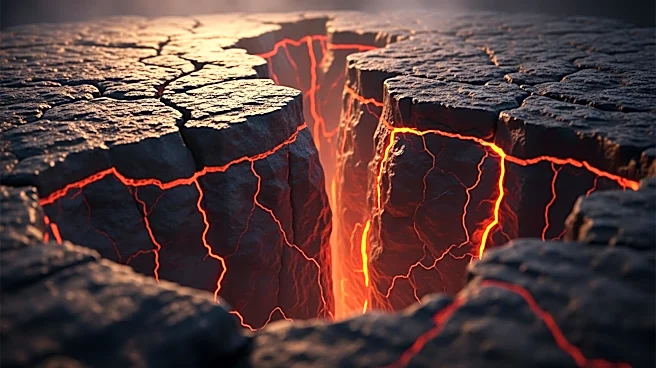
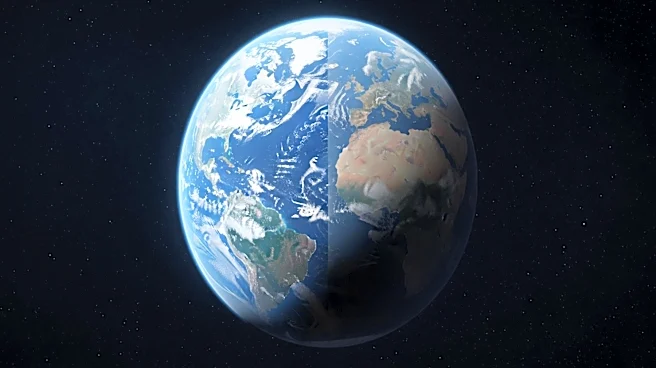
The Turkana Rift in Eastern Africa, part of the East African Rift System, is experiencing significant tectonic activity that could eventually lead to the formation of a new ocean. The African and Somali tectonic plates are moving apart at a rate of 4.7
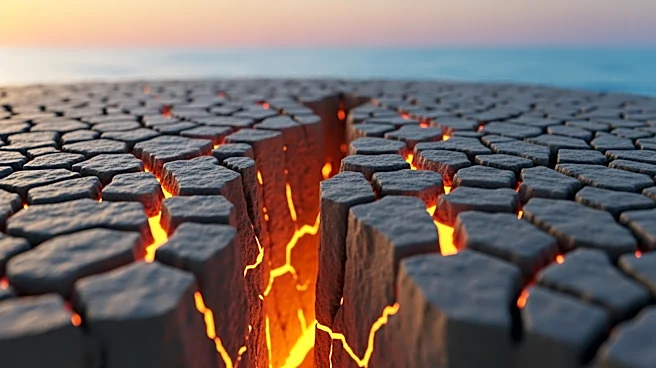
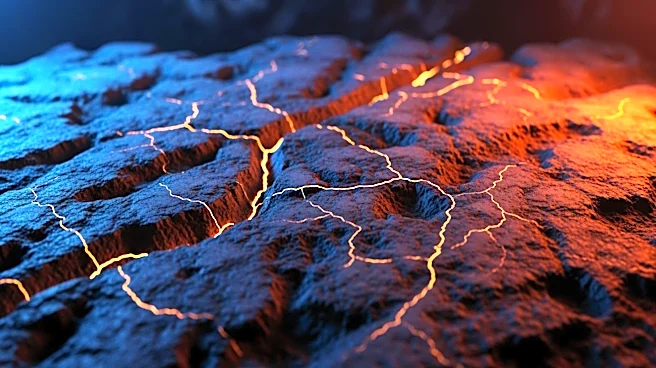
millimeters per year, causing the crust to thin and fracture. This process, known as rifting, allows magma to rise, potentially leading to a continental split. Recent studies have shown that the crust in this region is thinner than previously thought, indicating advanced rifting stages.
Why It's Important?
The ongoing tectonic activity in the Turkana Rift has significant implications for geological and evolutionary studies. The thinning crust and potential for a new ocean formation could reshape the African continent over millions of years. This region is also a key site for human evolution research, as it has preserved a rich fossil record due to geological conditions. Understanding these processes helps scientists reconstruct past environments and predict future geological changes, offering insights into Earth's tectonic evolution and its impact on climate and ecosystems.
What's Next?
As the rifting process continues, scientists will monitor the Turkana Rift for further developments. The potential for oceanization, where new seafloor is created, could take millions of years, but ongoing research will provide valuable data on continental breakup processes. This research could also influence models of climate and tectonic interactions, offering a deeper understanding of how these forces have shaped human evolution. Collaboration with institutions like the Turkana Basin Institute will be crucial in advancing this research.